Rhodesian Ridgeback
AKC & CKC Hound Group
“African Lion Dog”

Is This the Right Breed for You?
✔ Excellent Match For
- Active owners who want an athletic companion for brisk walks, hikes, and running
- People who appreciate a confident, loyal dog that’s often calm indoors once exercised
- Homes needing a reliable watchdog
• Strong and steady: typically reserved with strangers but devoted to family.
• Short coat care: grooming is usually easy, but shedding still happens.
• Best with routine: consistent exercise + structure prevents boredom behaviors.
✖ Consider Carefully If
- You want an “always eager-to-please” dog (they can be independent thinkers)
- You have limited time for exercise (under-stimulated Ridgebacks can get destructive)
- You need a guaranteed off-leash dog (prey drive can be strong)
• Big-dog strength: polite leash skills matter early—before they’re full grown.
• Socialization is key: helps prevent over-guarding or aloofness.
• Prey drive: careful management around small pets and wildlife is important.
Owner Suitability
“Rhodesian Ridgebacks thrive with confident, consistent owners who enjoy being active and can provide early training and socialization. They’re loyal and often surprisingly relaxed at home after exercise, but they’re powerful and independent—so structure, leash skills, and enrichment are essential.”Stats:
- Height: 24–27 inches
- Weight: 70–80 pounds
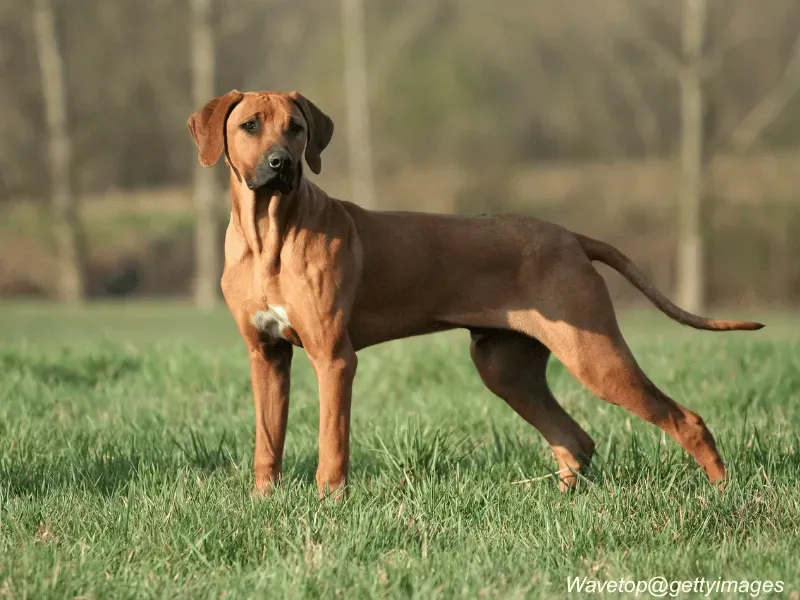
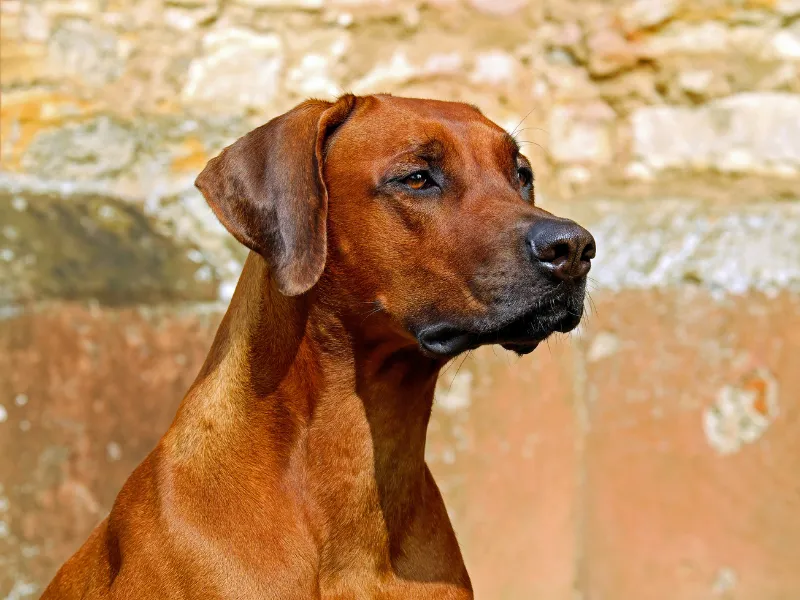
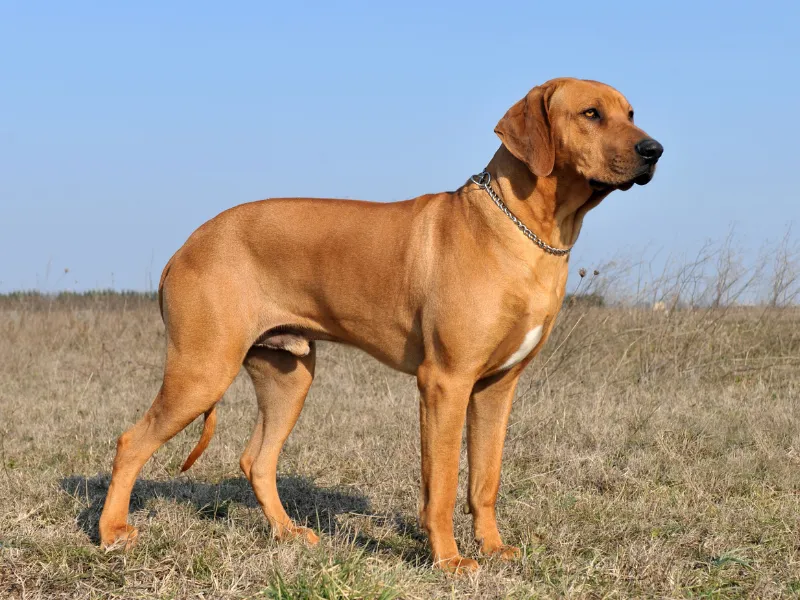
- Coat: Short, dense, sleek coat with a distinctive ridge
- Colors: Light wheaten to red wheaten
- Lifespan: 10–12 years
Origin & History
The Rhodesian Ridgeback developed in southern Africa from crosses between European dogs brought by Dutch and German settlers in the 16th and 17th centuries and the ridged native hunting dogs owned by the Khoikhoi people (once referred to as the Hottentots). The distinctive ridge of hair running along their backs—growing in the opposite direction to the rest of the coat—was a characteristic carefully preserved in the breeding program. These early settlers sought a versatile dog capable of withstanding the harsh African climate, protecting remote homesteads, and hunting large game across the rugged terrain.
By the late 19th century, the breed was further refined in the region of Rhodesia (modern-day Zimbabwe), where big-game hunters valued their endurance, courage, and ability to track and bay lions. The first official breed standard was drafted in Bulawayo, Rhodesia, in 1922, solidifying the breed's reputation and formalizing its characteristics. Often nicknamed the "African Lion Dog," Rhodesian Ridgebacks were historically used to track and hold large game at bay rather than to attack—working in teams and relying on speed, stamina, and nerve while hunters closed in.
Today, Rhodesian Ridgebacks are best known as loyal, athletic companions with strong instincts. With proper training and structured exercise, they're versatile dogs that can excel at hiking, running, and active family life. Their heritage as working dogs remains evident in their protective nature, intelligence, and unwavering loyalty to their families.
| Traits: | 1 | 2 | 3 | 4 | 5 |
|---|---|---|---|---|---|
| Energy: Needs vigorous daily exercise | ✓ | ||||
| Easy To Train: Intelligent but independent; needs consistent training | ✓ | ||||
| Shedding: Moderate; short, dense coat releases steady fur year-round. | ✓ | ||||
| Grooming: Low maintenance; weekly brushing sufficient | ✓ | ||||
| Family Dog: Loyal and protective; best with older children | ✓ | ||||
| Watchdog: Excellent; naturally protective | ✓ | ||||
| Beginner Friendly: Not recommended for first-time owners | ✓ | ||||
| Prey Drive: Very strong; will chase animals | ✓ | ||||
| Barking: Not excessive but will alert to intruders | ✓ | ||||
| Good with other dogs: If properly socialized early; strong prey drive and dominant nature may cause issues | ✓ |
Health Concerns:
- Hip Dysplasia: Common in large breeds
- Elbow Dysplasia: Joint development issue
- Hypothyroidism: Affects metabolism
- Juvenile Cataracts:Clouding of the eye lens
Please check the Canine Health Information Center (CHIC) and parent breed clubs for health information.
Glossary of general canine health conditions.