

Is This the Right Breed for You?
✔ Excellent Match For
- Owners who appreciate cat-like cleanliness and independent personalities
- People who want a quiet dog (they don't bark, though they yodel)
- Experienced owners who understand primitive breed traits
• Fastidious self-groomers—minimal doggy odor and shedding
• Intelligent and curious with unique problem-solving abilities
• Compact size with athletic build and elegant appearance
✖ Consider Carefully If
- You're a first-time dog owner (they're challenging and independent)
- You want reliable recall (strong prey drive makes off-leash risky)
- You have small pets (cats, rabbits) due to hunting instincts
• Can be aloof with strangers and may not warm up quickly
• Stubborn and clever—training requires creativity and patience
• Escape artists who need secure fencing
Owner Suitability
"Basenjis do best with experienced owners who appreciate their primitive nature, independence, and intelligence. They're not eager-to-please retrievers but rather cat-like companions who offer affection on their own terms. If you enjoy a clever, clean, quiet dog with ancient lineage and can provide secure environments and patient training, the Basenji can be a fascinating and rewarding companion."Stats:
- Height: 15-17 inches
- Weight: 20-24 pounds
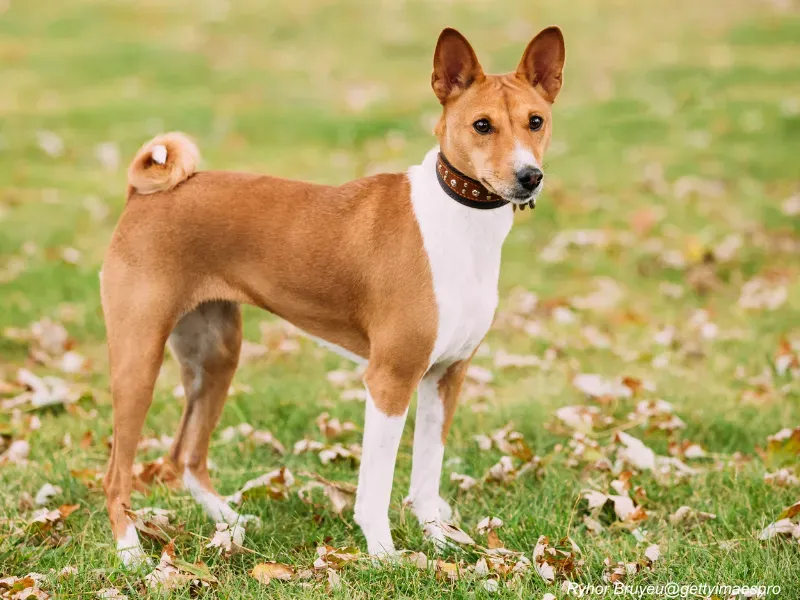
- Coat: Short, fine, and glossy
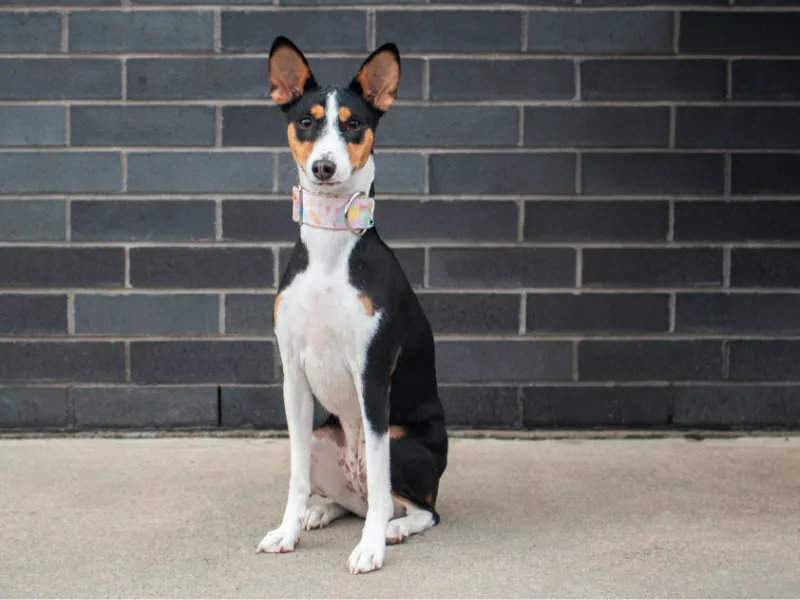
- Colors: Chestnut red, black, tricolor, or brindle, all with white markings
- Lifespan: 13-14 years
Origin & History
The Basenji is one of the oldest dog breeds, originating in Central Africa where they were valued by indigenous tribes for their hunting skills and intelligence. These dogs were discovered in the Congo region, where they were used to flush game into nets and control village vermin. The breed's ancient lineage is evident in Egyptian artifacts depicting similar dogs.
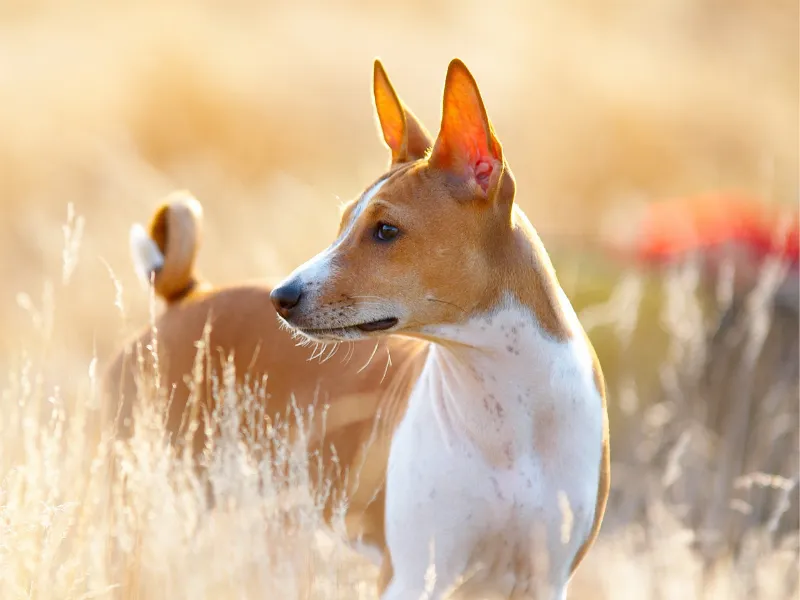
First imported to England in the 1930s and later to America, the Basenji gained attention for its unique "barkless" trait, though they do produce unusual yodel-like sounds. Known as the "African Barkless Dog," Basenjis are prized for their cat-like grooming habits, curled tail, and expressive forehead wrinkles.
This primitive breed retains many wild traits, including a strong independent streak and remarkable problem-solving abilities, making them fascinating but challenging companions.
| Traits: | 1 | 2 | 3 | 4 | 5 |
|---|---|---|---|---|---|
| Energy: High; needs vigorous daily exercise and mental stimulation | ✓ | ||||
| Easy To Train: Intelligent but stubborn; requires creative motivation | ✓ | ||||
| Shedding: Light; short, fine coat sheds lightly, minimal grooming neede. | ✓ | ||||
| Grooming: Minimal; fastidious self-cleaners like cats | ✓ | ||||
| Family Dog: Bonds closely but can be aloof; best with older children | ✓ | ||||
| Watchdog: Excellent; alert and observant but not aggressive | ✓ | ||||
| Beginner Friendly: Challenging; not recommended for first-time owners | ✓ | ||||
| Prey Drive: Extremely high; will chase small animals relentlessly | ✓ | ||||
| Barking: Doesn't bark but makes unique yodeling sounds | ✓ | ||||
| Good with other dogs:Can be cat-like; aloof | ✓ |
Health Concerns:
- Fanconi Syndrome: Kidney disorder unique to the breed
- Hemolytic Anemia: Immune-mediated blood disorder
- Hip Dysplasia: Malformation of the hip joint
- Progressive Retinal Atrophy: Degenerative eye disease
- Thyroid Disorders: Particularly hypothyroidism
- Intestinal Issues: Sensitive digestive systems
Please check the Canine Health Information Center (CHIC) and parent breed clubs for health information.
Glossary of general canine health conditions.