Bloodhound
AKC & CKC Hound Group
The Legendary Scent Hound

Is This the Right Breed for You?
✔ Excellent Match For
- Active families who enjoy outdoor adventures and hiking
- Owners with a good sense of humor (they're characters!)
- Those who appreciate a gentle, patient dog with children
• Unmatched nose: World's best scent tracking ability; a marvel to watch work.
• Gentle giant: Remarkably patient and tolerant, especially with children.
• Expressive personality: Soulful eyes and comical nature provide endless entertainment.
✖ Consider Carefully If
- You're fastidious about cleanliness (copious drool and slobber)
- You want an off-leash hiking companion (nose rules all)
- You're not prepared for their distinctive baying voice
• Drool factor: 5/5 - They sling slobber when they shake their heads.
• Stubborn streak: Independent thinkers who follow their nose, not commands.
• Vocalization: Loud, distinctive baying bay that carries for miles.
Owner Suitability
Bloodhounds are not for the faint of heart or the fastidious housekeeper. They are a sensory experience—the drool, the baying, the wrinkled face, and that extraordinary nose. These gentle giants are remarkably patient with children and deeply devoted to their families, but they live by their own rules. Once their nose catches a scent, the world disappears and they must follow. This means a securely fenced yard is non-negotiable. They're stubborn, so training requires patience and treats. But for those who appreciate their unique gifts, a Bloodhound offers an unparalleled companionship—a noble, ancient breed that has been working alongside humans for centuries, using the most powerful nose on the planet.Stats:
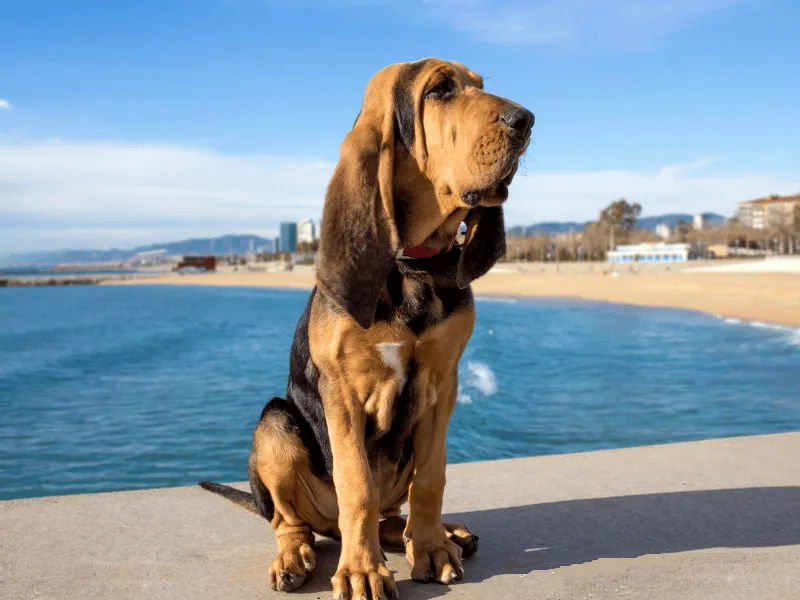
- Height: 23-27 inches
- Weight: 80-110 pounds
- Coat: Short, dense, and weather-resistant
- Colors: Black & tan, liver & tan, or red
- Lifespan: 10-12 years
Note: These guys are 5/5 droolers! Keep a towel handy at all times.
Origin & History
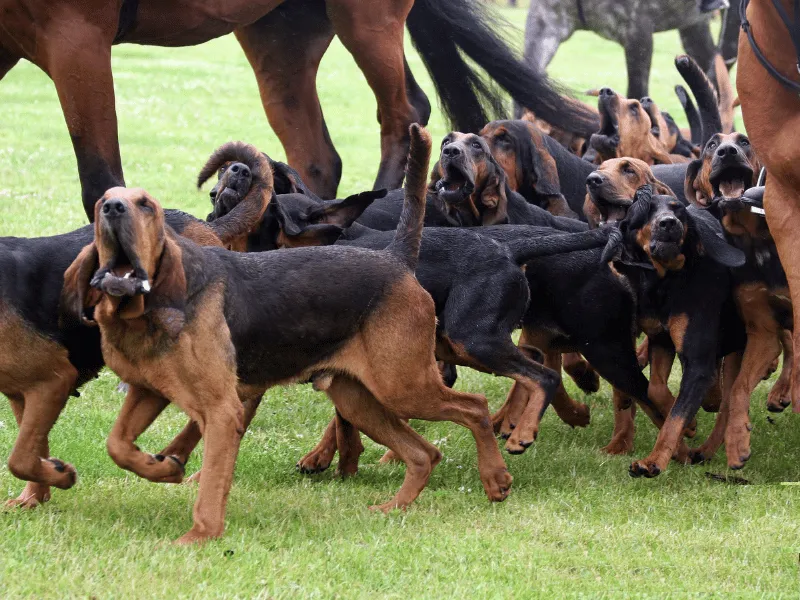
The Bloodhound's origins trace back to medieval Europe, developed by monks in Belgium at the Abbey of Saint-Hubert. These dogs were prized for their unmatched scenting ability and were originally called St. Hubert Hounds. Their English name "Bloodhound" refers to their pure bloodlines and noble breeding, not to any bloodthirsty nature. For centuries, these dogs were kept in monastic kennels, their bloodlines preserved with extraordinary care.
Bloodhounds were brought to England by William the Conqueror in 1066 and later to America where they became essential for tracking. Their reputation as "detective dogs" was established early—a Bloodhound's tracking evidence has been admissible in court for over a century. Today, their extraordinary olfactory abilities make them invaluable for search and rescue operations and police work. The AKC recognized the breed in 1885 as one of its earliest charter breeds.
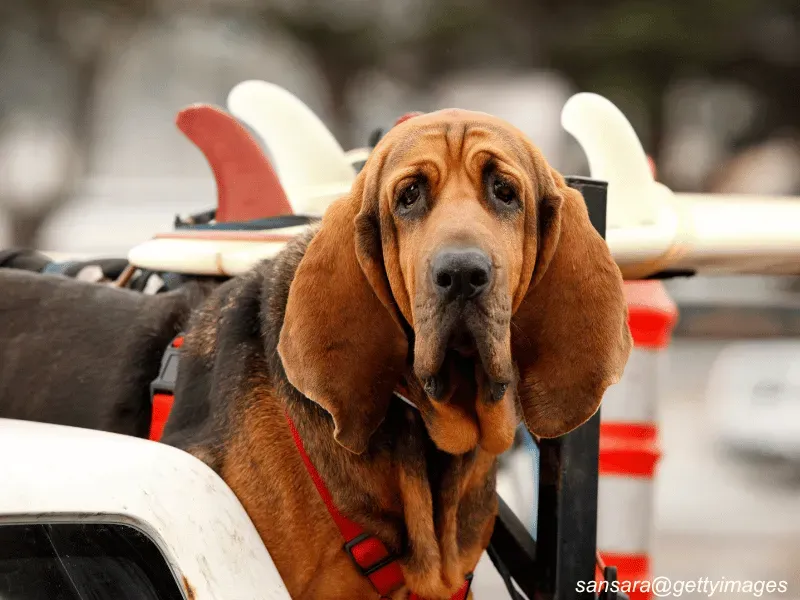
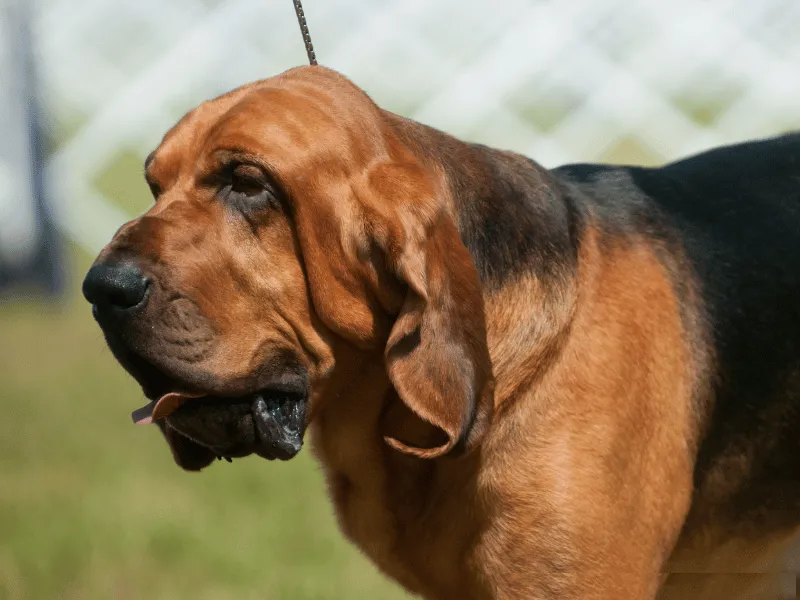
With their distinctive wrinkled face, droopy ears that sweep scent toward their nose, and solemn expression, Bloodhounds remain one of the most recognizable and capable scent hounds in the world. Their nose contains over 300 million scent receptors—more than any other breed—making them the gold standard for trailing work. Whether following a lost child or a wanted criminal, the Bloodhound's determination and accuracy remain unmatched in the canine world.
| Traits: | 1 | 2 | 3 | 4 | 5 |
|---|---|---|---|---|---|
| Energy: Moderate; needs regular exercise but tires after tracking work | ✓ | ||||
| Easy To Train: Intelligent but single-minded when on a scent; requires patience | ✓ | ||||
| Shedding: Moderate; short, dense coat releases steady fur. | ✓ | ||||
| Grooming: Moderate; weekly brushing and regular wrinkle cleaning needed | ✓ | ||||
| Family Dog: Gentle and affectionate with family; good with children | ✓ | ||||
| Watchdog: Will alert bark but generally too friendly to be protective | ✓ | ||||
| Beginner Friendly: Challenging for first-time owners due to size and stubbornness | ✓ | ||||
| Prey Drive: Extremely high; will follow scents relentlessly | ✓ | ||||
| Barking: Loud, deep bay when tracking; otherwise fairly quiet | ✓ | ||||
| Good with other dogs: Early socialization important; generally easy-going & friendly | ✓ |
Health Concerns:
- Hip Dysplasia: Malformation of the hip joint
- Elbow Dysplasia: Abnormal development of elbow joints
- Bloat (Gastric Torsion): Life-threatening stomach condition
- Ear Infections: Due to long, pendulous ears
- Patellar Luxation: Slipping kneecaps
- Degnerative Myelopathy (DM): Spinal cord disease
- Eye Problems: Including ectropion and entropion
Please check the Canine Health Information Center (CHIC) and parent breed clubs for health information.
Glossary of general canine health conditions.