Chesapeake Bay Retriever
AKC & CKC Sporting Group
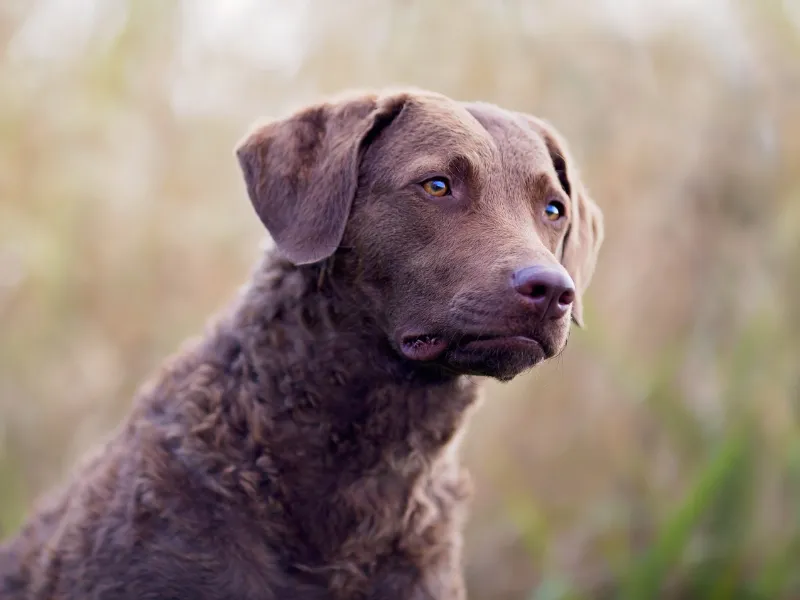
Also known as the “Chessie” — a tough, cold-water retriever with strong drive

Is This the Right Breed for You?
✔ Excellent Match For
- Active owners who want a driven retriever with real working ability
- Waterfowl hunters or people who spend time around lakes/ocean
- Homes that can provide consistent training and purposeful daily exercise
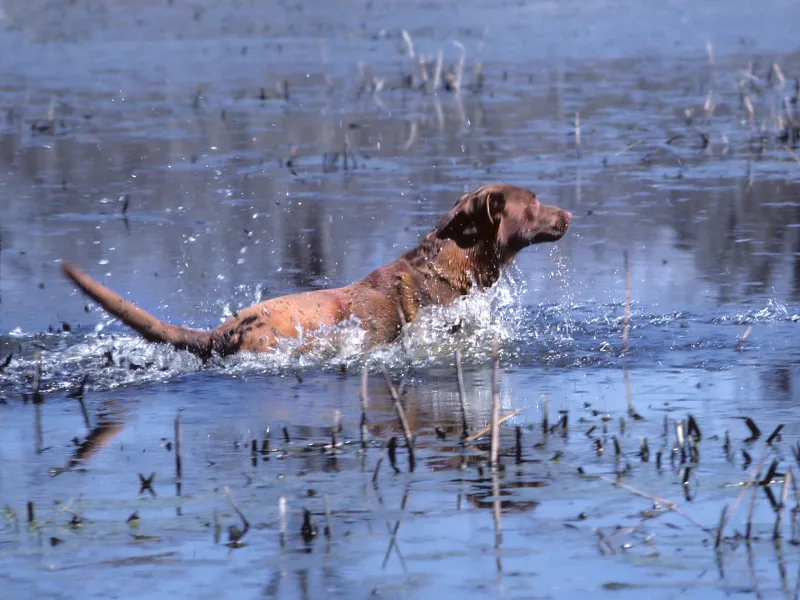
• Strong swimmer with a weatherproof coat built for cold water.
• Loyal and devoted — often very bonded to their family.
• Thrives with structure, routine, and a “job.”
✖ Consider Carefully If
- You want a universally social “everybody’s best friend” dog
- You prefer a low-drive, easygoing retriever type
- You dislike shedding or don’t want a dog who loves mud and water
• Independent streak: needs confident, consistent handling.
• Can be reserved with strangers — socialization matters.
• Oily coat = less frequent baths, but more “dog smell” potential.
Owner Suitability
“If you want a tough, hard-charging retriever built for cold water and real work, the Chessie is a standout. They do best with owners who enjoy training and can channel that drive into daily purpose — not a casual, low-structure lifestyle.”Stats
- Height: 21–26 inches
- Weight: 55–80 pounds
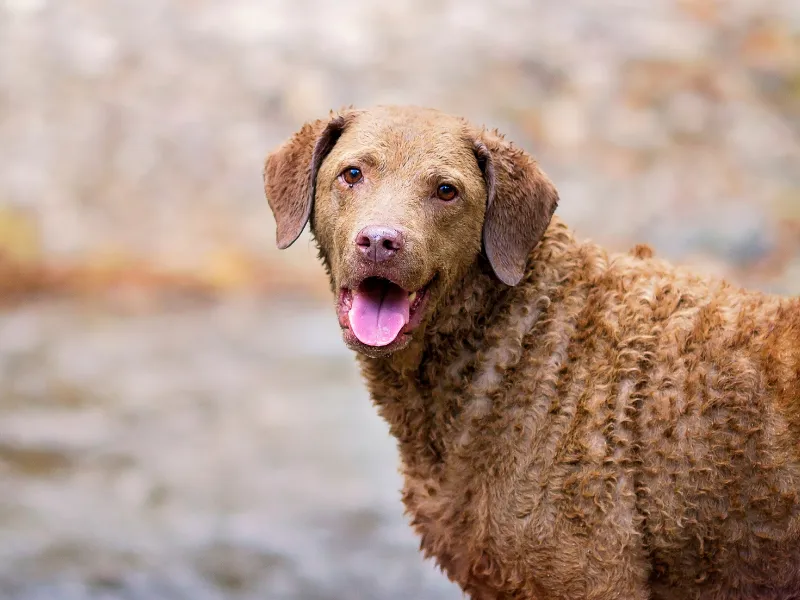
- Coat: Thick, oily, wavy double coat for water protection
- Colors: Shades of brown, sedge, or deadgrass
- Lifespan: 10–13 years
Origin & History
Developed in the United States along the Chesapeake Bay, these hardy retrievers were bred to work in icy water retrieving ducks for hunters. Their early ancestry is often linked to two Newfoundland-type pups rescued from a shipwreck in the early 1800s, later crossed with local retrievers and sporting dogs.
Chessies are known for power, endurance, and a distinctive water-resistant coat that helps them perform in rough weather and cold water. They’re intelligent and protective, often more reserved than other retrievers — and exceptionally devoted to their people.
Today, the Chesapeake Bay Retriever remains a premier cold-water retriever and a loyal companion for active owners who enjoy training and outdoor life.
| Traits: | 1 | 2 | 3 | 4 | 5 |
|---|---|---|---|---|---|
| Energy: High energy; needs regular vigorous exercise | ✓ | ||||
| Easy To Train: Very intelligent; tendency towards stubborness | ✓ | ||||
| Shedding: Heavy; thick, waterproof double coats sheds fairly heavily year-round. | ✓ | ||||
| Grooming: Moderate; weekly brushing needed | ✓ | ||||
| Family Dog: Good with children; protective of family | ✓ | ||||
| Watchdog: Excellent; naturally protective and alert | ✓ | ||||
| Beginner Friendly: Better for experienced dog owners | ✓ | ||||
| Prey Drive: High; strong retrieving instinct | ✓ | ||||
| Barking: Moderate; will alert to strangers | ✓ | ||||
| Good with other dogs: Good, if properly socialized. | ✓ |
Health Concerns:
- Hip Dysplasia: Common in larger breeds
- Progressive Retinal Atrophy (PRA): Degenerative eye disorder
- Exercise-Induced Collapse (EIC): Genetic neuromuscular condition
- Autoimmune Thyroiditis: Endocrine system disorder
- Degenerative Myelopathy: Progressive spinal cord disease
- Cardiac Issues:
Please check the Canine Health Information Center (CHIC) and parent breed clubs for health information.
Glossary of general canine health conditions.