Cocker Spaniel
AKC & CKC Sporting Group
(CKC recognizes as "American Cocker Spaniel")




Is This the Right Breed for You?
✔ Excellent Match For
- Families seeking an affectionate, gentle companion of moderate size
- Owners who enjoy grooming and maintaining a beautiful silky coat
- Those looking for an adaptable dog equally happy on walks or couch cuddles
• Merry disposition: known for constantly wagging tails and sweet expressions.
• Moderate energy: daily walks and play sessions keep them content.
• Good with children: gentle nature makes them excellent family dogs.
✖ Consider Carefully If
- You're not prepared for regular professional grooming and at-home brushing
- You have limited time for daily exercise and mental stimulation
- You're on a tight budget (prone to ear infections and other health issues)
• Ear care: long, heavy ears require regular cleaning to prevent infections.
• Health considerations: prone to eye issues, allergies, and ear problems.
• Can be sensitive: responds best to positive reinforcement training.
Owner Suitability
The Cocker Spaniel is a merry, affectionate companion who thrives on human connection. Their moderate energy and adaptable nature make them suitable for various lifestyles, but their beautiful coat requires significant grooming commitment. Best suited for owners who can provide daily exercise, regular ear care, and the attention this people-oriented breed craves.Stats:
- Height: 13.5-15.5 inches
- Weight: 20-30 pounds
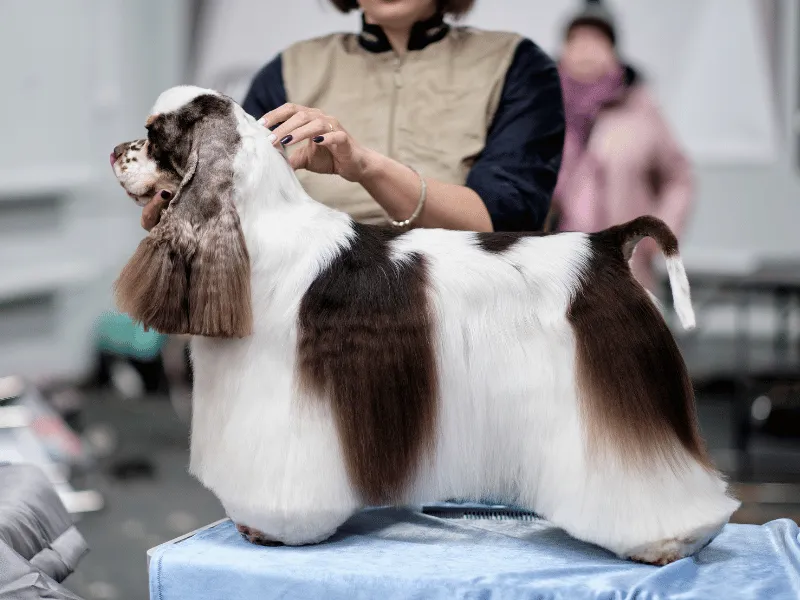
- Coat: Silky, medium-length with feathering on ears, chest, belly and legs
- Colors: Various including black, buff, parti-color, and more
- Lifespan: 10-14 years
Note: The Cocker Spaniel is smaller with a domed head and luxurious coat, bred primarily for show, while the English Cocker Spaniel is slightly larger, more athletic, and retains stronger working instincts for field hunting.
Origin & History
The Cocker Spaniel originated as a hunting dog in England, bred to flush woodcock (giving them their name). In the 19th century, they were brought to America where breeders developed a slightly different version that became the American Cocker Spaniel we know today.
The Cocker Spaniel became one of America's most popular breeds in the 1940s-50s, famously associated with the Disney film "Lady and the Tramp." Their merry disposition and beautiful coat made them favorites both as family pets and show dogs.
Today, while still capable hunting companions, most Cocker Spaniels serve as affectionate family pets known for their sweet expression, constantly wagging tail, and devoted nature.
| Traits: | 1 | 2 | 3 | 4 | 5 | |
|---|---|---|---|---|---|---|
| Energy: Higher energy; enjoys walks and playtime | ✓ | |||||
| Easy To Train: Intelligent and eager to please; responds well to positive training | ✓ | |||||
| Shedding: Moderate; double coat releases steady fur year-round with seasonal increases | ✓ | |||||
| Grooming: High maintenance; requires regular brushing and professional grooming | ✓ | |||||
| Family Dog: Excellent with children; gentle and affectionate | ✓ | |||||
| Watchdog: Good alert dog; will bark at strangers | ✓ | |||||
| Beginner Friendly: Good for novice owners willing to commit to grooming | ✓ | |||||
| Prey Drive: Moderate; may chase small animals | ✓ | |||||
| Barking: Can be vocal; tendency to bark at stimuli | ✓ | |||||
| Good with other dogs: Excellent; gets along well with other dogs | ✓ |
Health Concerns:
- Ear Infections: Common due to long, floppy ears
- Eye Problems: Including cataracts and glaucoma
- Hip Dysplasia: Moderate risk in the breed
- Autoimmune Diseases: Such as immune-mediated hemolytic anemia
- Skin Conditions: Allergies and seborrhea are common
- Patellar Luxation: Common in small to medium breeds
Please check the Canine Health Information Center (CHIC) and parent breed clubs for health information.
Glossary of general canine health conditions.