Flat-Coated Retriever
AKC & CKC Sporting Group


Origin & History
The Flat-Coated Retriever originated in mid-19th century England, developed from a mix of Newfoundland dogs, setter-type pointers, and possibly collie breeds. They were prized as versatile hunting companions who could both flush and retrieve game on land or water. At the turn of the 20th century, they were the most popular retriever in England before being surpassed by Labradors and Goldens.
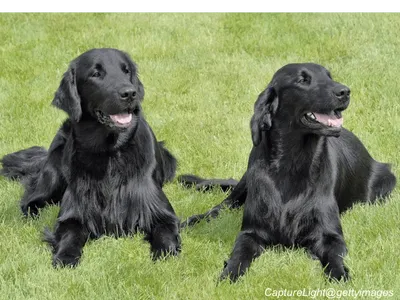
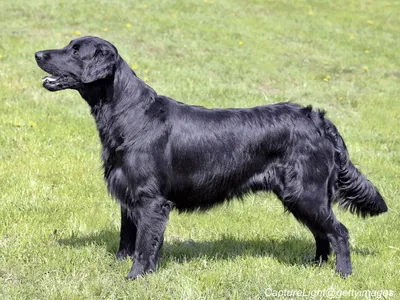
Their name comes from their distinctive flat-lying coat, which differs from the curly coat of Curly-Coated Retrievers or the dense undercoat of Labradors. Unlike other retrievers bred primarily for field work, Flat-Coats were always meant to be dual-purpose hunting dogs and family companions.
Today, Flat-Coated Retrievers excel in hunting tests, agility, obedience, and as therapy dogs. They maintain their signature cheerful outlook and remain less common than other retrievers, making them a special find for active families.
Stats:
- Height: 22-24.5 inches
- Weight: 60-70 lbs
- Coat: Dense, straight, medium-length with good sheen
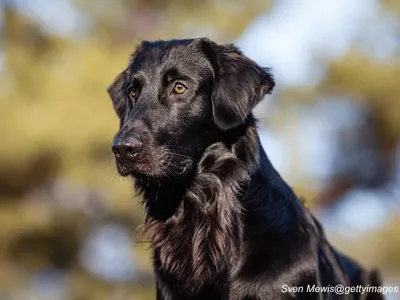
- Colors: Solid black or liver (no yellow or cream)
- Lifespan: 8-10 years
Note: The Flat-Coated Retriever's shorter lifespan compared to other retrievers is primarily due to higher cancer rates. Their exuberant, puppy-like personality lasts well into old age, making them wonderful companions for those who can provide plenty of exercise and training.
| Traits: | 1 | 2 | 3 | 4 | 5 |
|---|---|---|---|---|---|
| Energy: Very high; needs vigorous daily exercise | ✓ | ||||
| Easy To Train: Intelligent and eager to please | ✓ | ||||
| Shedding: Moderate; dense, sleek coat releases average amount of fur. | ✓ | ||||
| Grooming: Moderate; weekly brushing suffices | ✓ | ||||
| Family Dog: Excellent with children and other pets | ✓ | ||||
| Watchdog: Good; will alert but not protective | ✓ | ||||
| Beginner Friendly: Best for active owners | ✓ | ||||
| Prey Drive: High; strong retrieving instincts | ✓ | ||||
| Barking: Moderate; may bark when excited | ✓ | ||||
| Good with other dogs: Extremely sociable | ✓ |
Health Concerns:
- Cancer: Particularly hemangiosarcoma and lymphoma
- Hip Dysplasia: Common in medium-large breeds
- Patellar Luxation: Slipping kneecaps
- Progressive Retinal Atrophy (PRA): Degenerative eye disorder
Please check the Canine Health Information Center (CHIC) and parent breed clubs for health information.
Glossary of general canine health conditions.