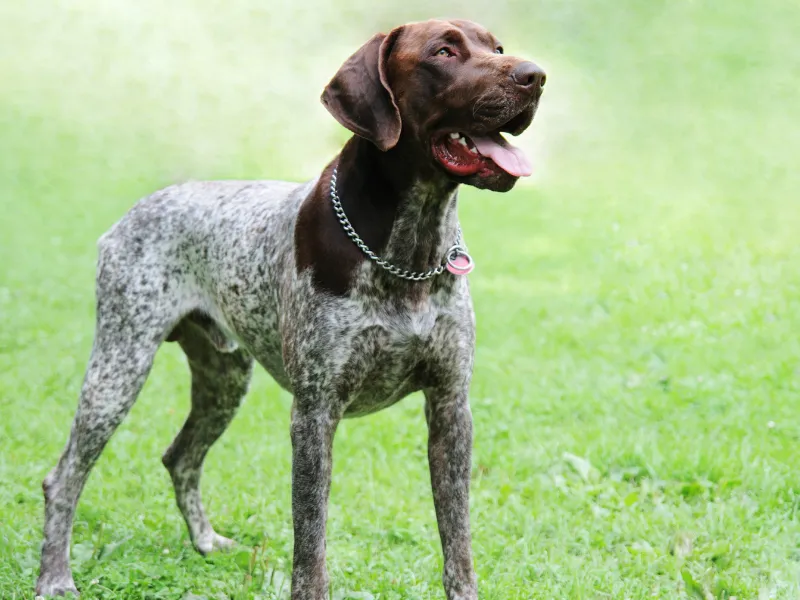
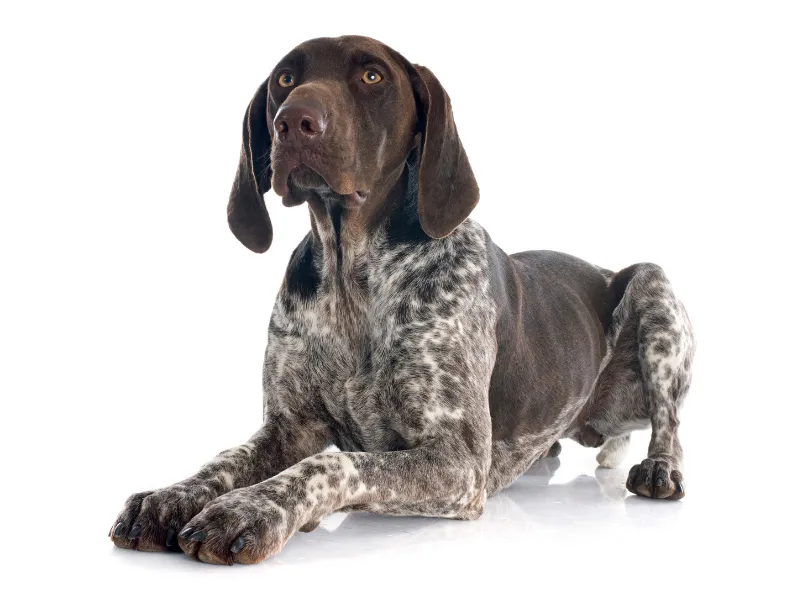
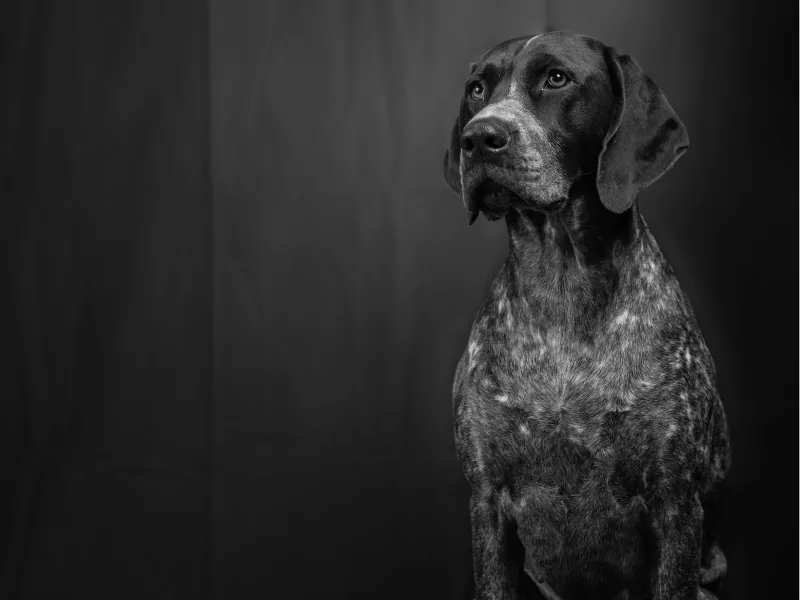
German Shorthaired Pointer
AKC & CKC Sporting Group
Is This the Right Breed for You?
✔ Excellent Match For
- Active hunters seeking a versatile all-purpose gun dog
- Athletes who want a running, hiking, or biking companion
- Experienced dog owners who enjoy training and dog sports
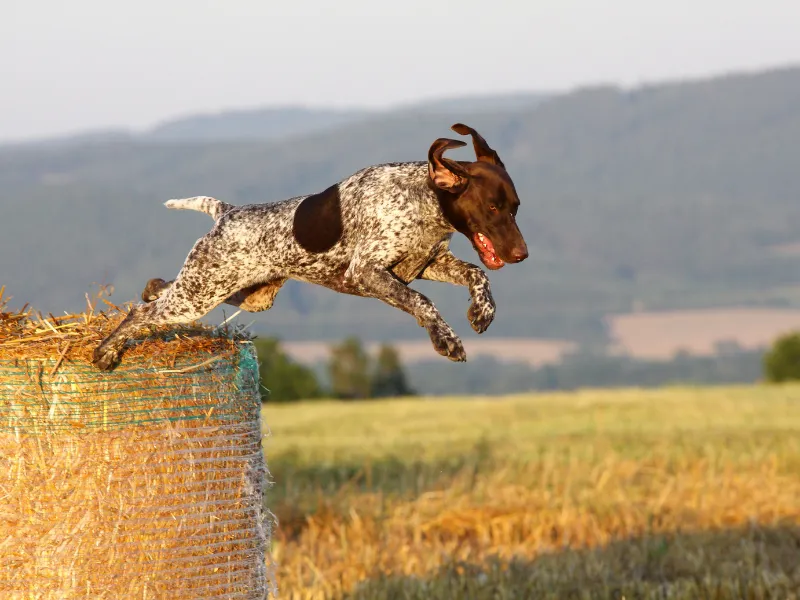
• Exceptional versatility: Excel in hunting, tracking, retrieving, and dog sports.
• Low grooming needs: Short coat requires minimal maintenance.
• Highly trainable: Eager to please and quick learners when properly motivated.
✖ Consider Carefully If
- You prefer a low-energy, relaxed household companion
- You lack time for extensive daily exercise (2+ hours needed)
- You have small pets (strong prey drive toward small animals)
• Extremely high energy: Require extensive daily physical and mental stimulation.
• Can be destructive: Under-exercised GSPs will chew, dig, and find trouble.
• Strong prey drive: Will chase cats, squirrels, and other small animals.
Owner Suitability
German Shorthaired Pointers are high-performance athletes requiring owners who can channel their boundless energy into hunting, field trials, or intense daily exercise. They learn quickly but bore easily, leading to destructiveness if under-stimulated. Proper socialization prevents caution or reactivity. With an active owner who provides physical and mental challenges, they are loyal, affectionate family companions.Stats:
- Height: 21-25 inches
- Weight: 45-70 pounds
- Coat: Smooth, short coat
- Colors: Liver/White, Liver/Roan
- Lifespan: 10-12 years
Origin & History
The German Shorthaired Pointer was meticulously developed in late 19th century Germany as the ultimate versatile hunting companion. German sportsmen sought to create a single breed that could excel at all aspects of hunting - pointing, retrieving, and tracking game across any terrain. Through careful crosses between Spanish Pointers, local German tracking dogs, English Pointers, and even Bloodhounds, they achieved their goal of producing the perfect all-purpose gun dog.
What emerged was an athletic, intelligent breed capable of locating and pointing upland game with instinctive precision, retrieving waterfowl through icy conditions with a soft mouth, and tracking wounded game over great distances with remarkable determination.
The modern German Shorthaired Pointer has proven itself as an exceptional companion for active owners. Their high intelligence and trainability have made them successful in agility, search and rescue, and as jogging partners.
While not suited for apartment living or sedentary lifestyles, the breed's versatility continues to win admirers worldwide, maintaining its status as one of the most capable and enthusiastic sporting dogs ever developed.
| Traits: | 1 | 2 | 3 | 4 | 5 |
|---|---|---|---|---|---|
| Energy: Requires 2+ hours of intense daily exercisey. | ✓ | ||||
| Ease Of Training: Intelligent but independent thinker. | ✓ | ||||
| Shedding: Moderate; short, dense coat releases steady fur. | ✓ | ||||
| Grooming: Low-maintenance; occasional brushing. | ✓ | ||||
| Family Dog: Good with older kids; may overwhelm toddlers. | ✓ | ||||
| Watchdog: Alert but not aggressive. | ✓ | ||||
| Beginner Friendly: Challenging for novice owners. | ✓ | ||||
| Prey Drive: Extremely high - will chase anything moving. | ✓ | ||||
| Barking: Vocal when excited or bored. | ✓ | ||||
| Good with other dogs: Typically friendly with other dogs. | ✓ |
Health Considerations
- Hip Dysplasia: Common in this active sporting breed (OFA screening recommended)
- Elbow Dysplasia: Developmental joint condition affecting mobility
- Lymphedema: Rare but serious lymphatic system disorder seen in some lines
- Bloat (GDV): Life-threatening stomach torsion - elevated risk due to deep chest
- Eye Conditions: Including entropion, PRA, and cataracts
- Heart Conditions: Particularly subaortic stenosis (SAS)
- Von Willebrands: Bleeding disorder
- Cone Degeneration: Results in blindness
Please check the Canine Health Information Center (CHIC) and parent breed clubs for health information.
Glossary of general canine health conditions.