Great Pyrenees
Majestic Livestock Guardian
AKC & CKC Working Group

Is This the Right Breed for You?
✔ Excellent Match For
- Families with space who want a calm, protective "gentle guardian"
- Experienced dog owners who appreciate independence and loyalty
- Homes seeking a devoted companion with moderate exercise needs
• Gentle nature: famously patient and affectionate with children
• Moderate energy: enjoys walks but is often relaxed indoors
• Strong guardian instincts: naturally protective of family and home
✖ Consider Carefully If
- You want a highly obedient, biddable dog — centuries of thinking for themselves means listening to others doesn't come easily
- You lack a securely fenced yard (they are known wanderers)
- You or your neighbors are sensitive to nighttime barking (their guardian instincts are most active after dark)
• Training commitment: bred to act independently as livestock guardians, they require patient, consistent training with positive reinforcement
• Barking behavior: naturally vocal at night when outside, as part of their centuries-old guardian heritage
• Roaming tendency: without proper fencing, they may wander to patrol their perceived territory
Owner Suitability
The Great Pyrenees is a magnificent guardian that requires specific ownership considerations. While gentle and devoted, their size and independence bring unique challenges. Success depends on proper training, early socialization, and commitment to their health and grooming needs.Stats:
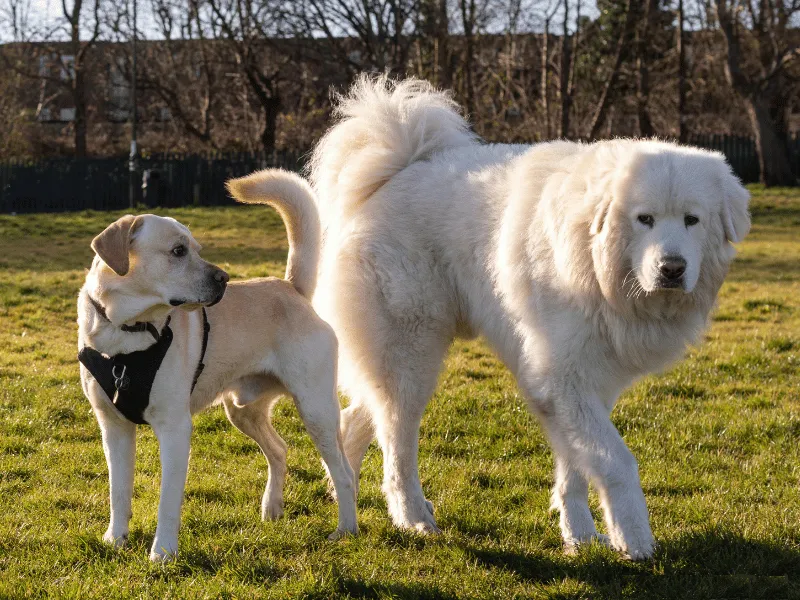
- Height: 25-32 inches
- Weight: 85-130 pounds
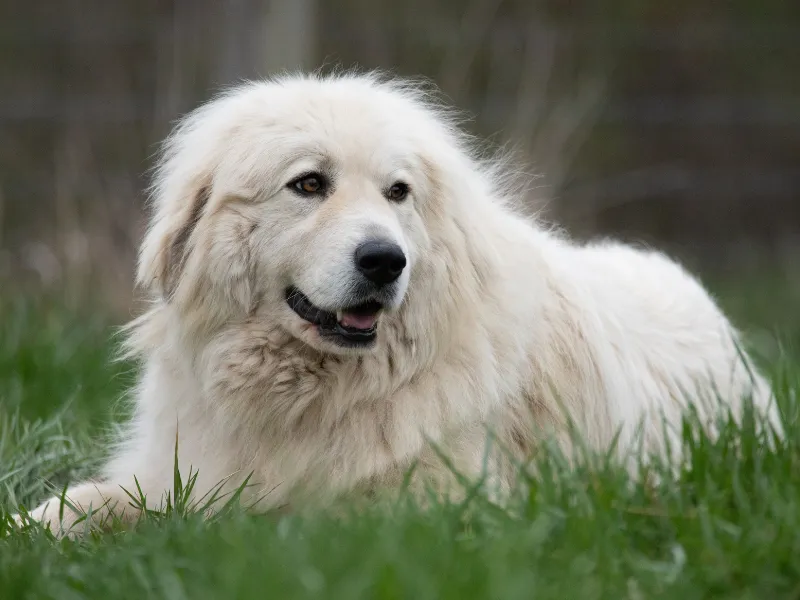
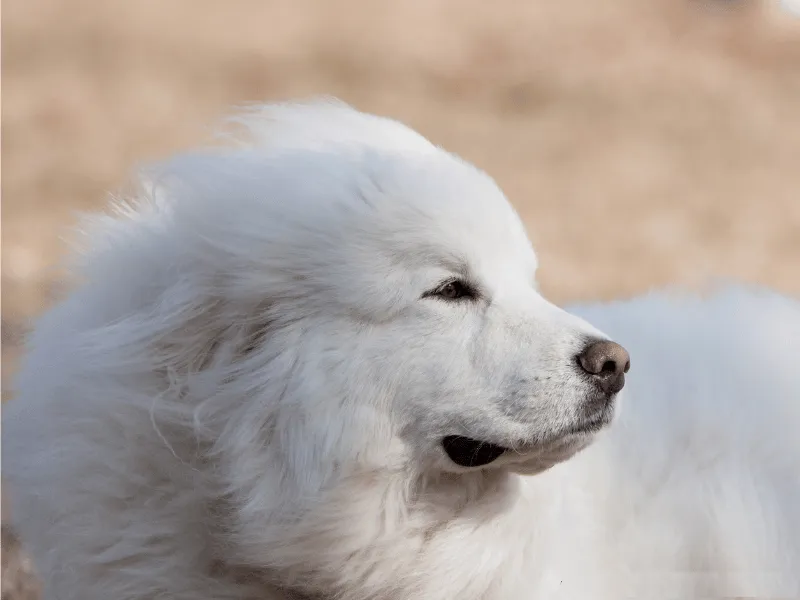
- Coat: Long, thick double coat with weather-resistant outer layer
- Colors: White or white with markings of badger, gray, or tan
- Lifespan: 10-12 years
Origin & History
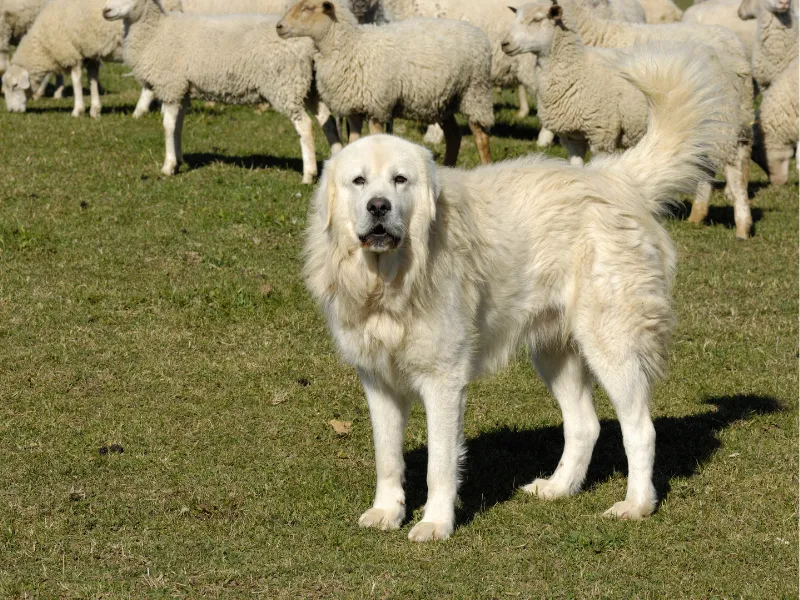
The Great Pyrenees is an ancient breed originating from the Pyrenees Mountains between France and Spain. Developed over thousands of years to guard livestock from predators like wolves and bears, these majestic dogs have been documented as early as 3000 BC and were favored by French nobility by the 17th century.
- Bred as livestock guardians in the Pyrenees Mountains
- Known as the "Pyrenean Mountain Dog" in Europe
- Brought to North America in the early 20th century
- Still used as working guardians on farms and ranches
Today, while still used as livestock guardians in some areas, most Great Pyrenees serve as devoted family companions. With their stunning white coat, regal bearing, and calm demeanor, they continue their centuries-old guardian heritage while forming deep bonds with their human families.
| Traits: | 1 | 2 | 3 | 4 | 5 |
|---|---|---|---|---|---|
| Energy: Moderate; needs regular exercise but not hyperactive | ✓ | ||||
| Easy To Train: Intelligent but independent; requires patient training | ✓ | ||||
| Shedding: Heavy; thick double coat sheds year-round | ✓ | ||||
| Grooming: High maintenance; requires brushing 2-3x weekly to prevent mats | ✓ | ||||
| Family Dog: Excellent with families; gentle, patient, and protective | ✓ | ||||
| Watchdog: Excellent natural guardian; protective without aggression | ✓ | ||||
| Beginner Friendly: Challenging; size, independence, & guarding instincts | ✓ | ||||
| Prey Drive: Moderate; protective instincts outweigh hunting drive | ✓ | ||||
| Barking: Frequent; will bark to alert and at night (traditional guarding behavior) | ✓ | ||||
| Good with other dogs: Tolerant, but may challenge same-sex dogs | ✓ |
Health Concerns:
- Hip/Elbow Dysplasia: Common joint issues in large breeds
- Bloat (GDV): Life-threatening emergency (especially critical for deep-chested breeds)
- Osteochondritis Dissecans: Joint cartilage disorder
- Patellar Luxation: Kneecap dislocation
- Eye Conditions: Including entropion and cataracts
- Canine Inherited Demyelinative Neuropathy: Neurological condition
Please check the Canine Health Information Center (CHIC) and parent breed clubs for health information.
Glossary of general canine health conditions.