Irish Water Spaniel
AKC & CKC Sporting Group


Origin & History
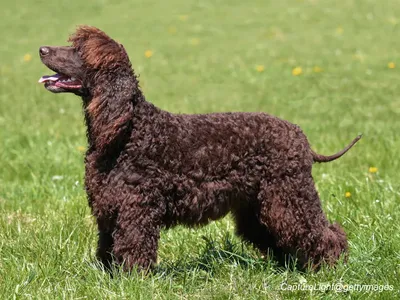
The Irish Water Spaniel is one of the oldest and most distinctive spaniel breeds, developed in Ireland in the 1830s as an all-purpose water retriever. With their unique "rat tail" and dense, curly coat, they were bred to work in the harsh Irish wetlands, retrieving waterfowl from both icy waters and thick cover.
Often called the "clown of the spaniel family" for their playful personality, these dogs were prized by hunters for their excellent swimming ability, intelligence, and strong retrieving instinct. The Irish Water Spaniel remains the tallest of the spaniels today.
While still used as hunting companions, Irish Water Spaniels have also become valued family pets known for their loyalty, intelligence, and distinctive appearance that sets them apart from other spaniels.
Stats:
- Height: 21-24 inches
- Weight: 45-65 pounds
- Coat: Dense, tight curls with oily texture for water resistance
- Colors: Rich liver/puce with purple hue (no white markings)
- Lifespan: 10-12 years
| Traits: | 1 | 2 | 3 | 4 | 5 |
|---|---|---|---|---|---|
| Energy: High; needs vigorous daily exercise and mental stimulation | ✓ | ||||
| Easy To Train: Intelligent and eager to please | ✓ | ||||
| Shedding: Low; dense, curly coat is low-shedding, with hair trapped in curls | ✓ | ||||
| Grooming: Moderate; regular brushing and professional grooming needed | ✓ | ||||
| Family Dog: Good with children; loyal and protective | ✓ | ||||
| Watchdog: Alert and protective without being aggressive | ✓ | ||||
| Beginner Friendly: Better for experienced owners due to energy and grooming needs | ✓ | ||||
| Prey Drive: Strong; bred as hunting retrievers | ✓ | ||||
| Barking: Infrequent; will alert to strangers | ✓ | ||||
| Good with other dogs: Ok, should be properly socialised | ✓ |
Health Concerns:
- Hip Dysplasia: Common in medium-large breeds
- Eye Problems: Including cataracts and retinal atrophy
- Autoimmune Thyroditis: Immune system mistakenly attacks thyroid
- Ear Infections: Due to heavy ear leather
- Canine Leukocyte Adhesion Deficiency (CLAD): Immunodeficiency disorder
Please check the Canine Health Information Center (CHIC) and parent breed clubs for health information.
Glossary of general canine health conditions.