Labrador Retriever
AKC & CKC Sporting Group


Is This the Right Breed for You?
✔ Excellent Match For
- Active families who enjoy outdoor activities, hiking, or swimming
- First-time dog owners seeking a trainable, people-pleasing companion
- Homes with children looking for a gentle, patient family dog
• Extremely trainable: eager to please and responds well to positive reinforcement.
• Great with children: known for their gentle, patient nature with kids of all ages.
• Social and friendly: typically gets along with other dogs, pets, and strangers.
✖ Consider Carefully If
- You prefer a low-energy dog or have limited time for daily exercise
- You want a quiet dog (Labs can be vocal when excited or playing)
- You're away from home for long hours most days
• High energy: needs substantial daily exercise (1-2 hours) to prevent destructive behaviors.
• Shedding: heavy shedders year-round, requiring regular grooming and vacuuming.
• Mouthy tendencies: as retrievers, they love carrying things and may chew if bored.
Owner Suitability
T he Labrador Retriever is one of America's most popular breeds for good reason—they're versatile, trainable, and excellent family companions. Success depends on providing adequate exercise, mental stimulation, and consistent training. Their enthusiasm and energy make them wonderful partners for active households.Stats:
- Height: 21.5-24.5"
- Weight: 55-80 lbs
- Coat: Double, short coat
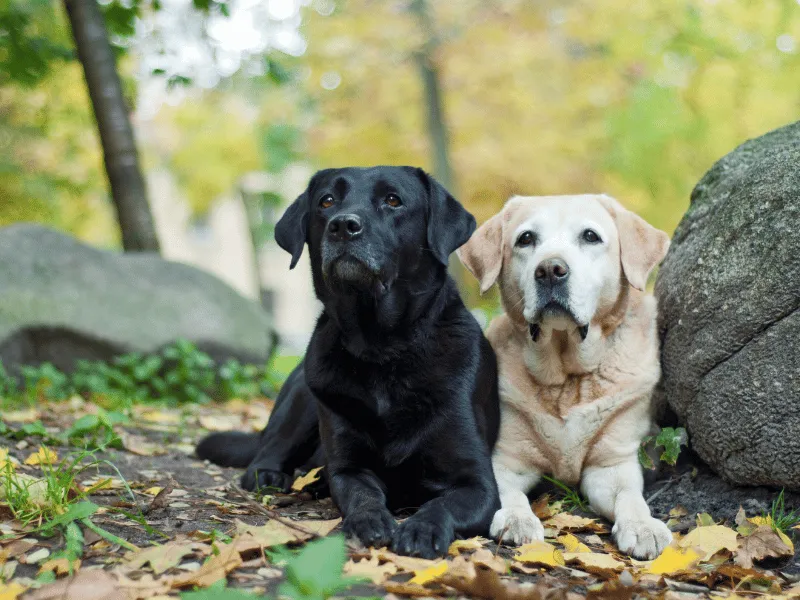
- Colors: Yellow, Black & Chocolate
- Lifespan: 10-12 years
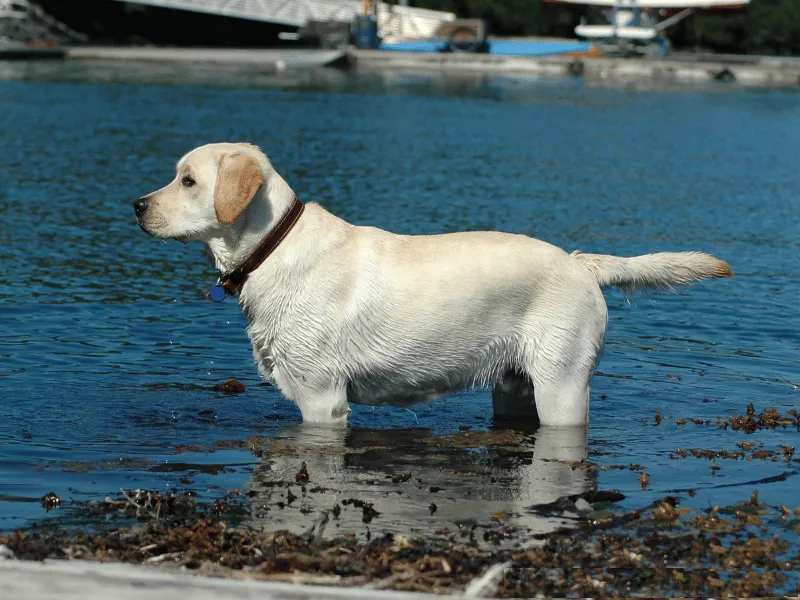
This happy, go lucky breed is extremely fond of swimming. They have a tendency to become obese.
Modern Labs excel as:
- Guide dogs for the blind
- Therapy Animals
- Search and rescue dogs
- Detection dogs (bombs/drugs)
- Family Companions
Origin & History
The Labrador Retriever traces its roots to the rugged coastal communities of Newfoundland, Canada in the early 1700s, where it developed from the now-extinct St. John's Water Dog. These sturdy working companions earned their keep alongside local fishermen, performing vital tasks in the icy North Atlantic waters. Their water-resistant double coat, powerful otter-like tail, and innate swimming ability made them perfectly suited for retrieving fishing nets, hauling ropes between boats, and catching fish that escaped hooks.
British sportsmen visiting Newfoundland in the early 1800s recognized the breed's exceptional working abilities and began importing these "small water dogs" to England. By the late 19th century, the breed had established itself as the premier gun dog throughout England, equally adept at marking fallen game, making delicate retrieves in thick cover, and working tirelessly in cold water conditions.
The breed's intelligence, versatility, and agreeable temperament soon made it a favorite both in the field and in family homes.
| Traits: | 1 | 2 | 3 | 4 | 5 |
|---|---|---|---|---|---|
| Energy: Needs 60+ minutes of vigorous exercise daily. | ✓ | ||||
| Ease Of Training: Eager to please and highly food-motivated. | ✓ | ||||
| Shedding: Heavy; thick double coat releases fur year round. | ✓ | ||||
| Grooming: Moderate shedding; weekly brushing required. | ✓ | ||||
| Family Dog: Excellent with children and other pets. | ✓ | ||||
| Watchdog: Friendly to everyone - poor guard instincts. | ✓ | ||||
| Beginner Friendly: Ideal first dog with proper exercise. | ✓ | ||||
| Prey Drive: Moderate - may chase but easily recalled. | ✓ | ||||
| Barking: Alert barking but not excessive. | ✓ | ||||
| Good with other dogs: One of the best breeds for multi-dog homes. | ✓ |
Health Considerations
- Hip and Elbow Dysplasia: Joint issues common in larger breeds
- Progressive Retinal Atrophy (PRA): Genetic eye disease leading to blindness
- Exercise-Induced Collapse (EIC): A neuromuscular disorder triggered by intense activity
- Obesity: Prone to weight gain, increasing joint and metabolic risks
- Heart Conditions: Including tricuspid valve dysplasia
- Cancer: Higher risk of lymphoma, hemangiosarcoma, and mast cell tumors
- Ear Infections: Due to floppy ears and moisture retention
Please check the Canine Health Information Center (CHIC) and parent breed clubs for health information.
Glossary of general canine health conditions.