Leonberger
AKC & CKC Working Group
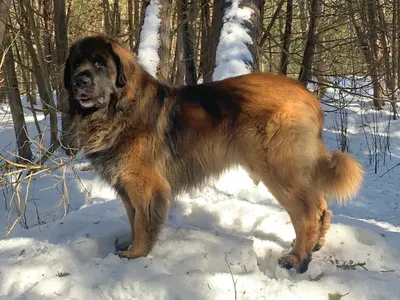


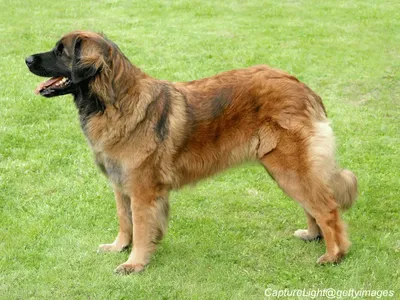
Origin & History
The Leonberger was developed in the 1840s in Leonberg, Germany by Heinrich Essig, who wanted to create a dog resembling the lion on the town's crest. By crossing Landseer Newfoundlands, Saint Bernards, and Pyrenean Mountain Dogs, he created this majestic breed. Originally status symbols for royalty and wealthy families, Leonbergers were later used as farm dogs, draft animals, and water rescue dogs.
Nearly extinct after both World Wars, the breed was revived by dedicated German breeders. Today, these "gentle lions" excel as therapy dogs, water rescuers, and devoted family companions, combining impressive size with a sweet temperament.
With their lion-like mane and kind expression, Leonbergers remain symbols of their German hometown while forming deep bonds with their human families.
Stats:
- Height: 26-32 inches
- Weight: 90-140 | 110-170 pounds
- Coat: Medium-long, water-resistant double coat
- Colors: Lion-yellow, red, reddish-brown, or sandy with black mask
- Lifespan: 7-10 years
| Traits: | 1 | 2 | 3 | 4 | 5 |
|---|---|---|---|---|---|
| Energy: Moderate; needs regular exercise but not hyperactive | ✓ | ||||
| Easy To Train: Intelligent and eager to please; responds well to positive training | ✓ | ||||
| Shedding: Heavy; thick double coat releases fur constantly with massive seasonal shedding. | ✓ | ||||
| Grooming: High maintenance; frequent brushing needed | ✓ | ||||
| Family Dog: Excellent with families; gentle and patient with children | ✓ | ||||
| Watchdog: Good; will alert to strangers but not aggressive | ✓ | ||||
| Beginner Friendly: Suitable for dedicated first-time owners | ✓ | ||||
| Prey Drive: Low; gentle with other animals | ✓ | ||||
| Barking: Moderate; typically only when necessary | ✓ | ||||
| Good with other dogs: Early socialization is important | ✓ |
Health Concerns:
- Hip/Elbow Dysplasia: Common joint issues in giant breeds
- Leonberger Polyneuropathy: Breed-specific neurological disorder
- Addison's Disease: Adrenal gland disorder
- Osteosarcoma: Bone cancer common in large breeds
- Bloat (GDV): Life-threatening stomach torsion
- Heart Conditions: Including dilated cardiomyopathy
Please check the Canine Health Information Center (CHIC) and parent breed clubs for health information.
Glossary of general canine health conditions.