Miniature Pinscher
King of Toys
AKC & CKC Toy Group

Is This the Right Breed for You?
✔ Excellent Match For
- Active individuals or families who want a fearless, entertaining small dog
- Experienced dog owners who appreciate a confident, self-possessed personality
- Homes seeking a lively companion with a big-dog attitude in a compact package
• Fearless nature: bold and confident despite their small size
• High energy: enjoys play, walks, and mental challenges
• Strong bonds: forms deep attachments to their human family
✖ Consider Carefully If
- You have young children (they may be too energetic and nippy)
- You have small pets like cats, birds, or rodents (high prey drive)
- You want a highly obedient, biddable dog — they are independent thinkers with a stubborn streak
• Training commitment: their independent nature requires patience, consistency, and positive reinforcement
• Vocal nature: they are alert watchdogs who will bark at perceived threats
• Health concerns: prone to patellar luxation, PRA, and other small-breed issues
Owner Suitability
The Miniature Pinscher is a spirited companion that brings endless entertainment and loyalty to the right home. While small in size, they have a big-dog personality that demands respect and consistent handling. Success depends on proper training, early socialization, and providing adequate exercise and mental stimulation for this energetic breed.Stats:
- Height: 10-12.5 inches
- Weight: 8-10 pounds
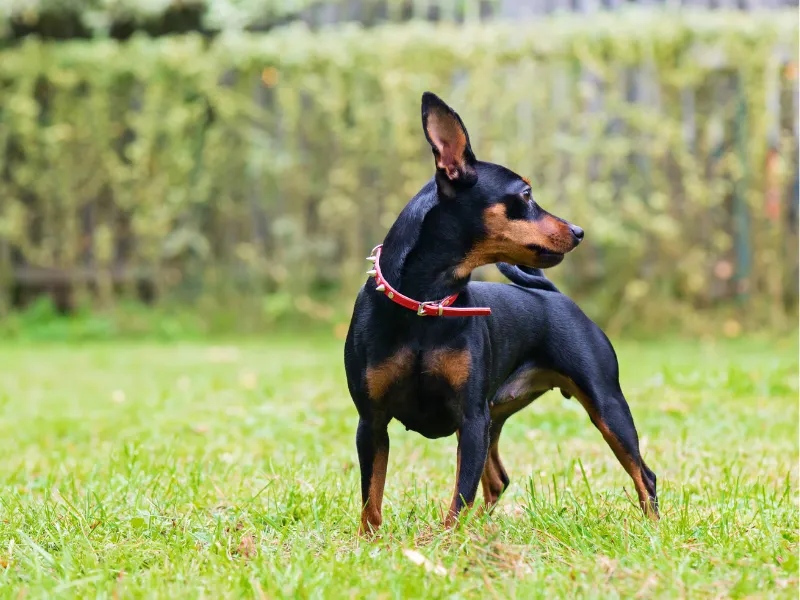
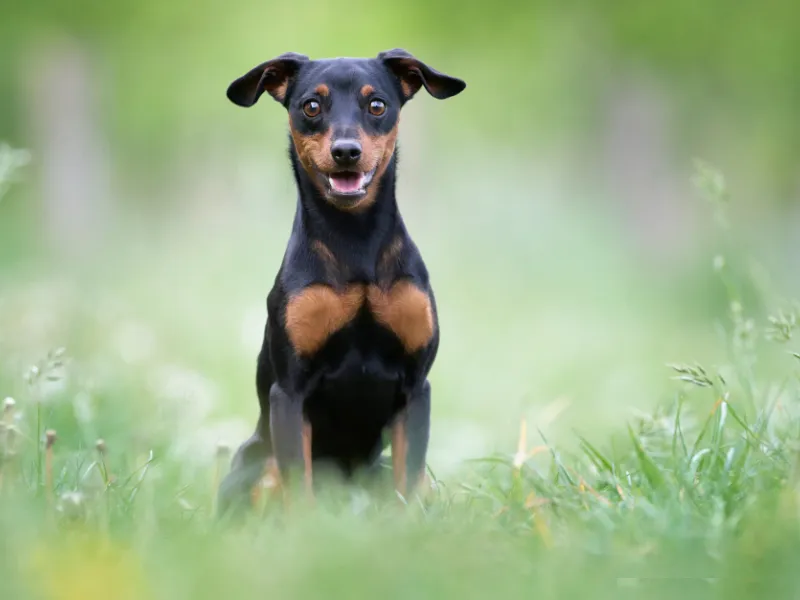
- Coat: Short, smooth, glossy coat
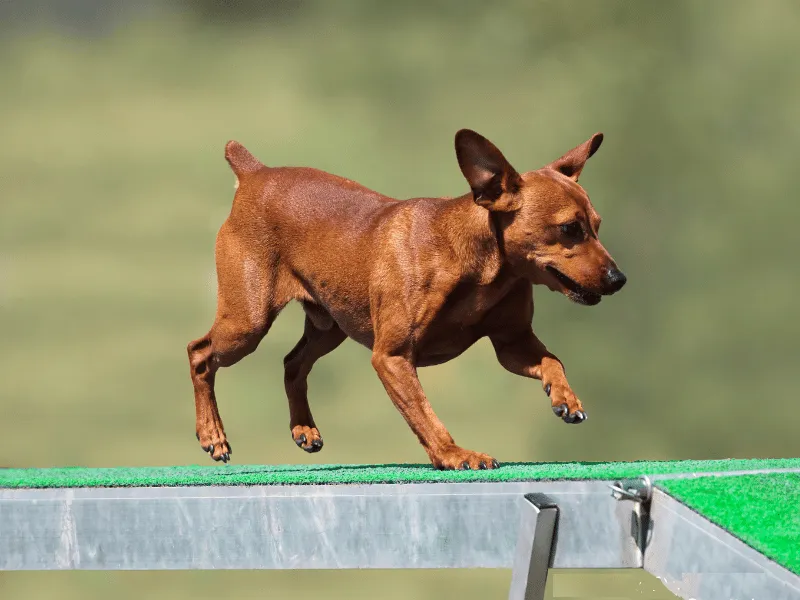
- Colors: Solid red, stag red, black & rust, or chocolate & rust
- Lifespan: 12-16 years
Origin & History
The Miniature Pinscher, often called the "Min Pin," originated in Germany several centuries ago. Despite their resemblance to a miniature Doberman Pinscher, they are not related to the Doberman at all — in fact, the Min Pin is the older breed, with records dating back to the 1600s. They were developed to hunt vermin in homes, stables, and barns.
- Developed in Germany as a skilled ratter and vermin hunter
- Known as the "King of Toys" for their regal bearing and fearless attitude
- Recognized by the AKC in 1925
- Despite their size, they possess a true big-dog personality
Today, Miniature Pinschers remain lively, curious, and self-possessed dogs that make excellent companions for active owners. They thrive in homes where they are treated as full family members and given plenty of attention and activity. Their distinctive high-stepping "hackney" gait and alert expression give them an aristocratic bearing that commands attention wherever they go.
| Traits: | 1 | 2 | 3 | 4 | 5 |
|---|---|---|---|---|---|
| Energy: Very high energy; needs daily exercise and mental stimulation | ✓ | ||||
| Easy To Train: Intelligent but independent; can be stubborn | ✓ | ||||
| Shedding: Low; short, smooth coat releases minimal fur | ✓ | ||||
| Grooming: Low maintenance; occasional brushing and nail trimming | ✓ | ||||
| Family Dog: Good with older children; may be too energetic for small kids | ✓ | ||||
| Watchdog: Excellent; very alert and vocal | ✓ | ||||
| Beginner Friendly: Challenging due to stubbornness and high energy | ✓ | ||||
| Prey Drive: High prey drive; unsafe around cats, birds, or rodents | ✓ | ||||
| Barking: Frequent; tends to be vocal and alert | ✓ | ||||
| Good with other dogs: Early socialization is critical | ✓ |
Health Concerns:
- Patellar Luxation: Common in small breeds; kneecap dislocation
- Legg-Calvé-Perthes Disease: Hip joint disorder affecting blood supply to the femoral head
- Progressive Retinal Atrophy (PRA): Degenerative eye disorder that can lead to blindness
- Hypothyroidism: Underactive thyroid gland affecting metabolism
- Cardiac Issues: Heart murmurs and other heart conditions
- Epilepsy: Neurological seizure disorder
Please check the Canine Health Information Center (CHIC) and parent breed clubs for health information.
Glossary of general canine health conditions.