Norwich Terrier
AKC & CKC Terrier Group
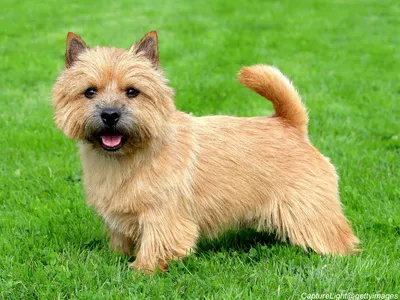
Photo Credit: CaptureLight | Getty Images

Photo Credit: CaptureLight | Getty Images

Photo Credit: DevidO | Getty Images

Photo Credit: DevidO | Getty Images
Origin & History
The Norwich Terrier originated in East Anglia, England during the late 19th century as a small ratting terrier, developed to hunt vermin and foxes, .
The breed was nearly identical to the Norfolk Terrier until 1964 when the prick-eared variety was officially recognized as the Norwich Terrier by the English Kennel Club. The American Kennel Club followed suit in 1979.
Today, while still capable working terriers, Norwich are primarily beloved companions known for their fearless spirit, compact size, and affectionate nature.
Stats:
- Height: 9-10 inches at shoulder
- Weight: 11-12 pounds
- Coat: Wiry, straight topcoat with soft undercoat
- Colors: Red, wheaten, black & tan, or grizzle
- Lifespan: 12-16 years
| Traits: | 1 | 2 | 3 | 4 | 5 |
|---|---|---|---|---|---|
| Energy: High energy for size; needs daily exercise and mental stimulation | ✓ | ||||
| Easy To Train: Intelligent but independent; consistent positive training needed | ✓ | ||||
| Shedding: Low; wiry double coat sheds minimally, especially with proper hand-stripping. | ✓ | ||||
| Grooming: Moderate; weekly brushing plus hand-stripping 2-3 times yearly | ✓ | ||||
| Family Dog: Good with children and other pets if socialized early | ✓ | ||||
| Watchdog: Excellent alert dog; will bark at intruders | ✓ | ||||
| Beginner Friendly: Suitable for novice owners willing to meet exercise needs | ✓ | ||||
| Prey Drive: High; will chase small animals if not trained | ✓ | ||||
| Barking: Moderate; will alert to visitors and noises | ✓ | ||||
| Good with other dogs: Generally friendly & sociable | ✓ |
Health Concerns:
- Patellar Luxation: Common in small breeds; kneecap dislocation
- Hip Dysplasia: Mild risk compared to larger breeds
- Epilepsy: Some genetic predisposition to seizures
- Tracheal Collapse: Risk due to small size; use harness not collar
- Dental Issues: Crowded teeth common in small breeds
- Allergies: Some skin and food allergy sensitivity
Please check the Canine Health Information Center (CHIC) and parent breed clubs for health information.
Glossary of general canine health conditions.