Papillon
AKC & CKC Toy Group
(Continental Toy Spaniel / Papillon / Phalène)


Is This the Right Breed for You?
✔ Excellent Match For
- Owners who want a highly intelligent toy dog that loves training and games
- People interested in agility, obedience, trick training, or rally (they often excel)
- Homes that want a lively, affectionate companion that can adapt to apartment living
• Big brain, small body: needs mental stimulation as much as exercise.
• Light on grooming compared to many long-coated breeds (no undercoat), but regular brushing helps.
• Usually social and upbeat when well-socialized early.
✖ Consider Carefully If
- You want a very low-energy lap dog (they’re active and alert)
- You have very rough play in the home (tiny bones need careful handling)
- You don’t want barking tendencies (many are watchful and will alert)
• House-training consistency matters—small dogs often need extra routine.
• Socialization helps prevent nervousness around big dogs or busy environments.
• Enrichment prevents “busy” behaviors (demand barking, pacing, mischief).
Owner Suitability
“Papillons thrive with owners who enjoy training and interaction. They’re bright, energetic, and affectionate—so plan for daily play, short walks, and mental games. If you want a small dog that learns fast and loves being involved, the Papillon is an excellent choice.”Stats:
- Height: 8–11 inches
- Weight: 5–10 pounds
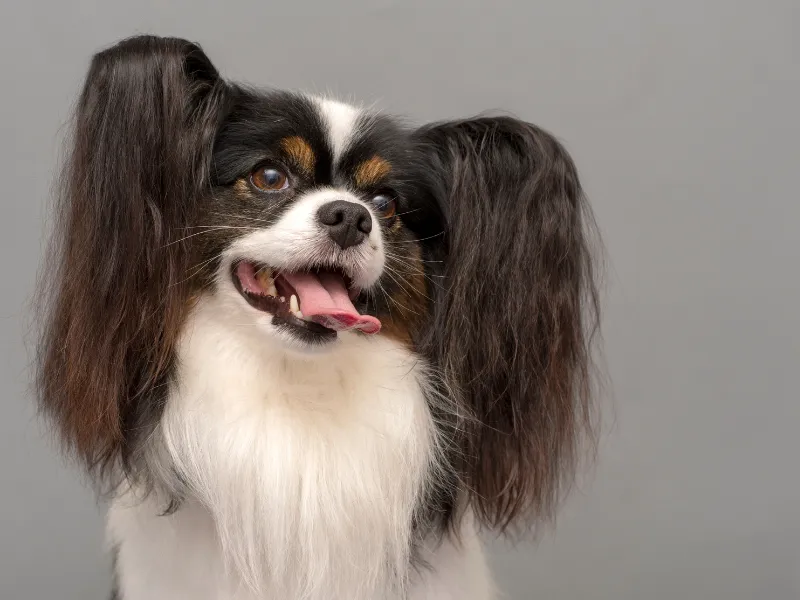
- Coat: Long, silky, straight (typically no undercoat)
- Colors: White with patches of any color (commonly black, sable, red)
- Lifespan: 14–16 years
Care note: Despite their fine coat, Papillons generally don’t require heavy trimming—regular brushing and ear-fringe care usually does the trick.
Origin & History
The Papillon’s name comes from its signature “butterfly” ears (papillon is French for “butterfly”). The breed traces back to European toy spaniels that were beloved companions of nobility and often appeared in historic portraits.
Internationally, the breed is known as the Continental Toy Spaniel, with two ear varieties: the erect-eared Papillon and the drop-eared Phalène (“moth”). Both types can appear in the same litter.
Today, Papillons are cherished for their elegance and surprising athleticism. They’re small, but typically bold and capable, and many excel in agility and obedience thanks to their quick minds and enthusiasm for training.
| Traits: | 1 | 2 | 3 | 4 | 5 |
|---|---|---|---|---|---|
| Energy: High energy for size; needs regular exercise | ✓ | ||||
| Easy To Train: Extremely intelligent; excels in obedience | ✓ | ||||
| Shedding: Low; silky single coat releases minimal fur. | ✓ | ||||
| Grooming: Moderate maintenance; needs regular brushing | ✓ | ||||
| Family Dog: Good with gentle children; best for quieter homes | ✓ | ||||
| Watchdog: Excellent alert dog; will bark at strangers | ✓ | ||||
| Beginner Friendly: Good for novice owners willing to train | ✓ | ||||
| Prey Drive: Moderate; may chase small animals | ✓ | ||||
| Barking: Can be vocal; tendency to alert bark | ✓ | ||||
| Good with other dogs: Generally good; they're friendly, social, and adaptable | ✓ |
Health Concerns:
- Patellar Luxation: Common in small breeds
- Dental Problems: Prone to tooth decay
- Progressive Retinal Atrophy (PRA): Can lead to blindness
Please check the Canine Health Information Center (CHIC) and parent breed clubs for health information.
Glossary of general canine health conditions.