
Is This the Right Breed for You?
✔ Excellent Match For
- Active owners who want an energetic, athletic dog that loves to work and play
- People who enjoy training, dog sports, and interactive games (they’re bright and eager)
- Families who can provide daily exercise plus mental stimulation—every day
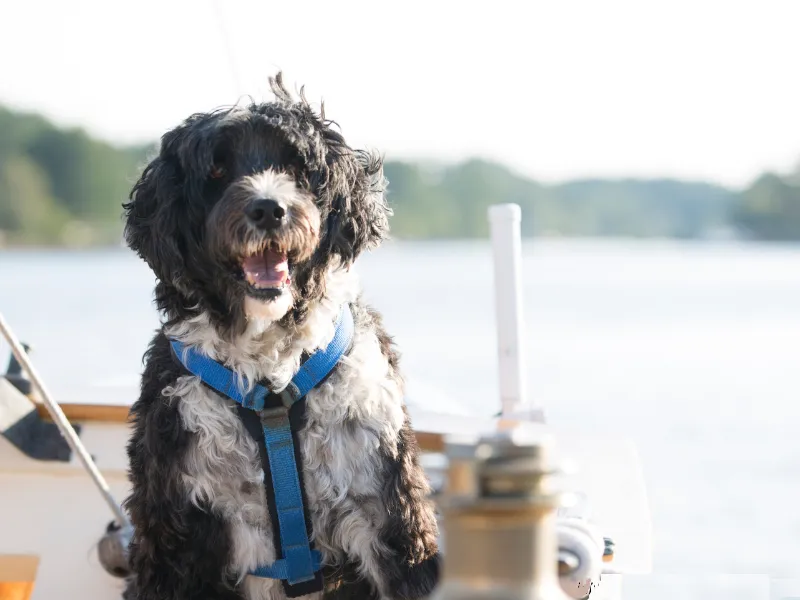
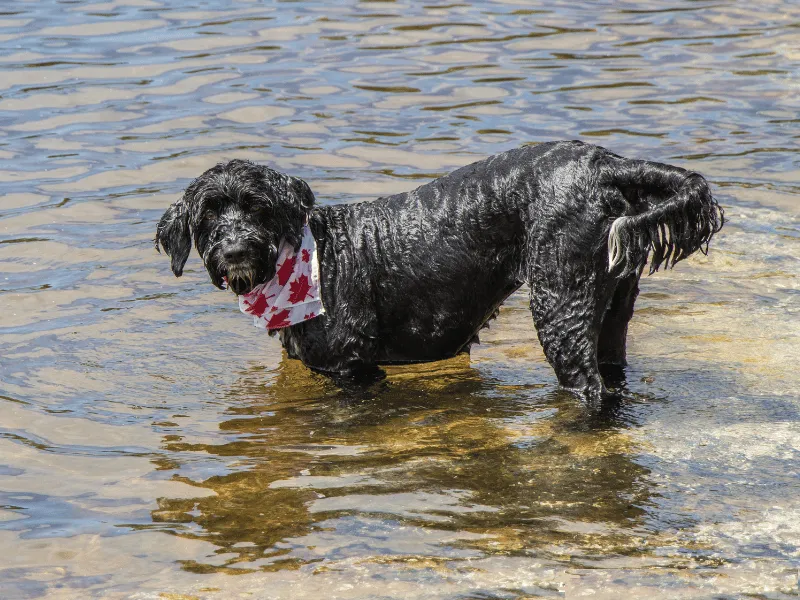
• Water-loving: many Porties adore swimming, retrieving, and water games.
• Intelligent and biddable: typically learns quickly with positive training.
• People-focused: happiest when included in family routines.
✖ Consider Carefully If
- You want a low-energy dog (they’re high-drive and can be intense without outlets)
- You don’t want grooming upkeep (regular brushing + trims are needed)
- You’re away long hours daily (boredom can lead to barking and destruction)
• Needs a job: training, scent games, retrieving, and structured play prevent mischief.
• Mouthy adolescence is common: channel it with appropriate chew/retrieve games.
• Alert barking can appear without training and routine.
Owner Suitability
“Portuguese Water Dogs thrive with owners who enjoy training and an active lifestyle. They’re smart, energetic, and people-oriented, but they need daily exercise and mental work—plus regular grooming. If you want a sporty companion that loves being part of the action (especially near water), a Portie can be a fantastic match.”Stats:
- Height: 17–23 inches
- Weight: 35–60 pounds
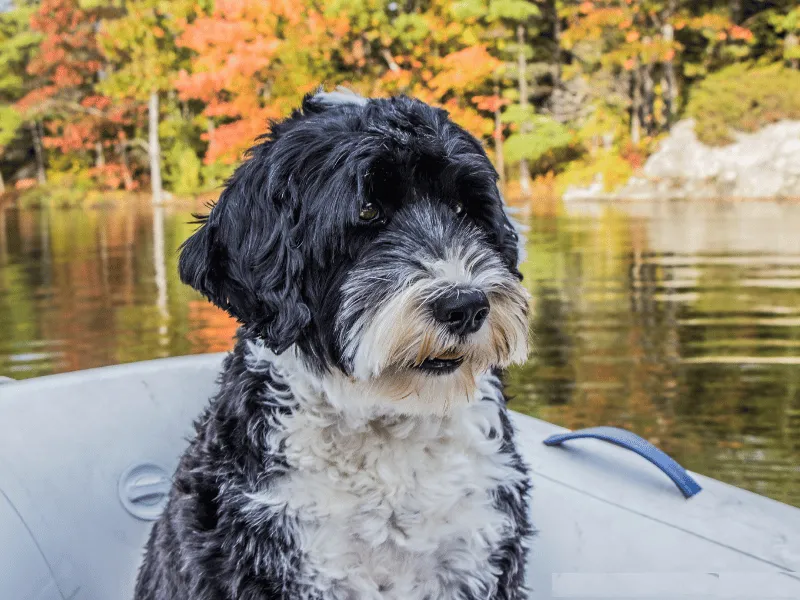
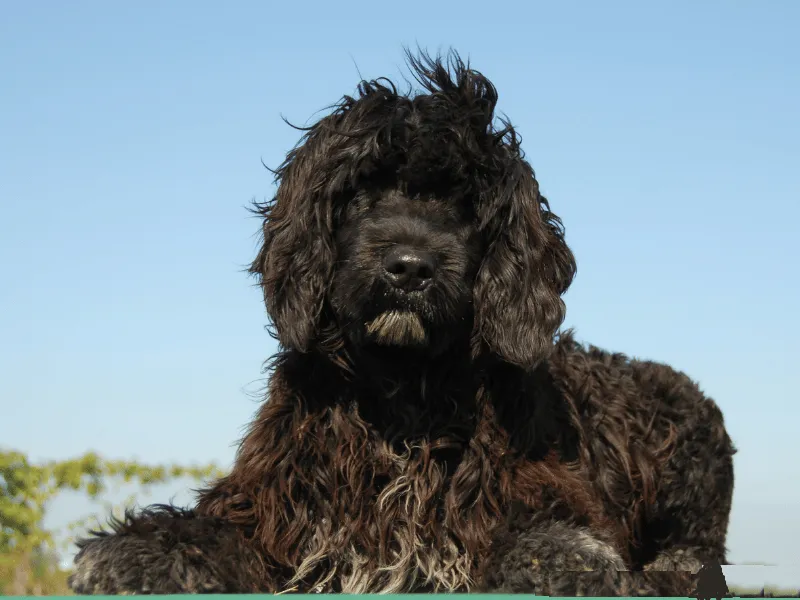
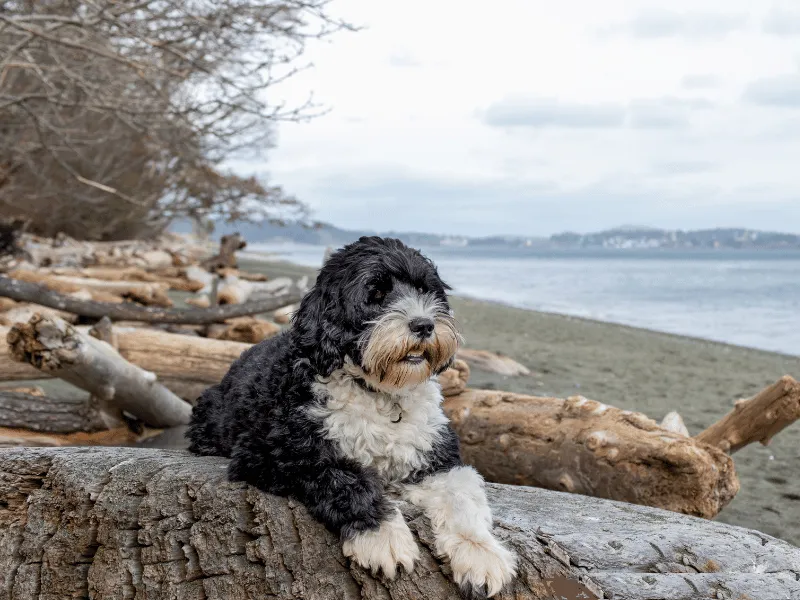
- Coat: Curly or wavy waterproof coat (low-shedding; requires grooming)
- Colors: Black, white, brown, or black & white
- Lifespan: 12–15 years
Coat note: Regular brushing helps prevent mats, and most owners schedule routine professional grooming to maintain comfort and coat health.
Origin & History
The Portuguese Water Dog developed along Portugal’s coast as a working partner to fishermen. For generations, these dogs helped retrieve gear, carry messages, and assist with tasks in and around the water—earning a reputation for toughness, intelligence, and stamina.
Their webbed feet and water-resistant coat made them well-suited for cold, choppy conditions. Though the breed’s numbers declined in the early 1900s, preservation efforts helped rebuild the population.
Today, Porties remain energetic working dogs at heart. Many excel in obedience, rally, agility, dock diving, water work, and therapy—while also being affectionate family companions for active households.
| Traits: | 1 | 2 | 3 | 4 | 5 |
|---|---|---|---|---|---|
| Energy: High energy; needs vigorous daily exercise including swimming | ✓ | ||||
| Easy To Train: Highly intelligent and eager to please; excels at obedience | ✓ | ||||
| Shedding: Very Low; single-layer curly or wavy coat releases minimal fur, similar to human hair. | ✓ | ||||
| Grooming: High maintenance; regular brushing and professional clipping needed | ✓ | ||||
| Family Dog: Excellent with children; affectionate and playful | ✓ | ||||
| Watchdog: Alert and protective; good alarm system | ✓ | ||||
| Beginner Friendly: Good for active owners committed to grooming | ✓ | ||||
| Prey Drive: Moderate; may chase small animals | ✓ | ||||
| Barking: Can be vocal when excited or alerting | ✓ | ||||
| Good with other dogs: Generally good; they're friendly, social, and playful by nature | ✓ |
Health Concerns:
- Hip Dysplasia: Screening recommended despite medium size
- Progressive Retinal Atrophy (PRA): Leading cause of blindness
- GM1 Storage Disease: Fatal neurological disorder (DNA test available)
- Juvenile Dilated Cardiomyopathy: Heart condition in young dogs
Please check the Canine Health Information Center (CHIC) and parent breed clubs for health information.
Glossary of general canine health conditions.