Russian Toy (Russkiy Toy)
AKC & CKC Toy Group

Photo Credit: TaynaPanova | Getty Images

Photo Credit: TaynaPanova | Getty Images

Photo Credit: TaynaPanova | Getty Images

Photo Credit: vladimirvasil | Getty Images
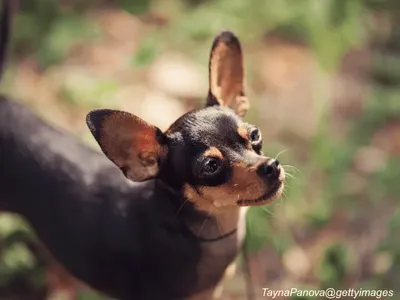
Photo Credit: TaynaPanova | Getty Images

Photo Credit: alisa24 | Getty Images
Origin & History
The Russian Toy, also known as Russkiy Toy, is a small companion breed developed in Russia in the early 20th century. Descended from English Toy Terriers brought to Russia before the 1917 Revolution, the breed was nearly lost during the Soviet era but was revived by dedicated Russian breeders in the 1950s.
Originally bred as a ratter and companion dog, the Russian Toy comes in two coat varieties: smooth-coated and long-coated.
Known for their elegant appearance and lively personality, Russian Toys are cherished as affectionate companions and alert watchdogs despite their tiny size.
Stats:
- Height: 8-10 inches
- Weight: 3-6 pounds
- Coat: Smooth or long (with feathering)
- Colors: Black & tan, brown & tan, blue & tan, red
- Lifespan: 12-14 years
| Traits: | 1 | 2 | 3 | 4 | 5 |
|---|---|---|---|---|---|
| Energy: High for size; lively and active | ✓ | ||||
| Easy To Train: Intelligent but can be stubborn; responds to positive methods | ✓ | ||||
| Shedding: Low. smooth or long coat; generally light shedding and easy upkeep | ✓ | ||||
| Grooming: Smooth coat: minimal brushing | ✓ | ||||
| Family Dog: Good with older children; fragile for toddlers | ✓ | ||||
| Watchdog: Excellent; surprisingly alert and vocal | ✓ | ||||
| Beginner Friendly: Good for attentive owners | ✓ | ||||
| Prey Drive: Moderate; retains some terrier instincts | ✓ | ||||
| Barking: Frequent; tends to be vocal | ✓ | ||||
| Good with other dogs: Ok if properly socialised; bold personality may lead to conflicts | ✓ |
Health Concerns:
- Patellar Luxation: Slipping kneecaps
- Dental Issues: Common in small breeds
- Legg-Calvé-Perthes Disease: Hip joint degeneration
- Eye Problems: Including progressive retinal atrophy
Please check the Canine Health Information Center (CHIC) and parent breed clubs for health information.
Glossary of general canine health conditions.