Saint Bernard
AKC & CKC Working Group
The Gentle Alpine Rescuer


Is This the Right Breed for You?
✔ Excellent Match For
- Families with space for a giant breed (large home and yard)
- Those seeking a calm, patient, gentle companion for children
- Owners who appreciate a low-energy indoor dog (surprisingly sedentary)
- People with a good sense of humor about drool and slobber
• Legendary gentleness: Exceptionally patient and tolerant with children.
• Calm demeanor: Content to lounge indoors after moderate exercise.
• Natural guardian: Protective instincts without aggression.
✖ Consider Carefully If
- You're fastidious about cleanliness (5/5 drool factor!)
- You live in a small apartment or have limited space
- You're not prepared for significant veterinary costs (giant breed health issues)
- You have limited strength to handle a powerful, large dog
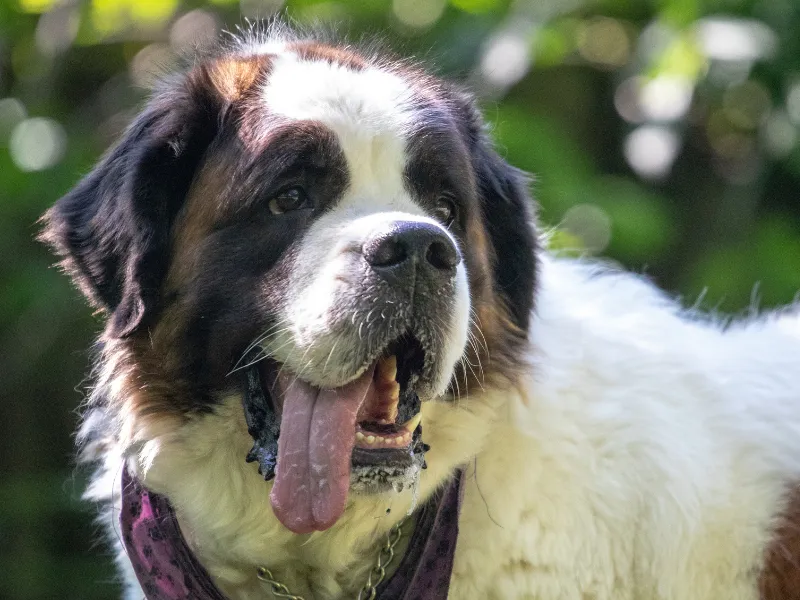
• Heavy drooler: Keep towels handy at all times—especially after meals.
• Short lifespan: 8-10 years is typical for giant breeds.
• Heat sensitive: Thick coats mean they struggle in warm weather.
Owner Suitability
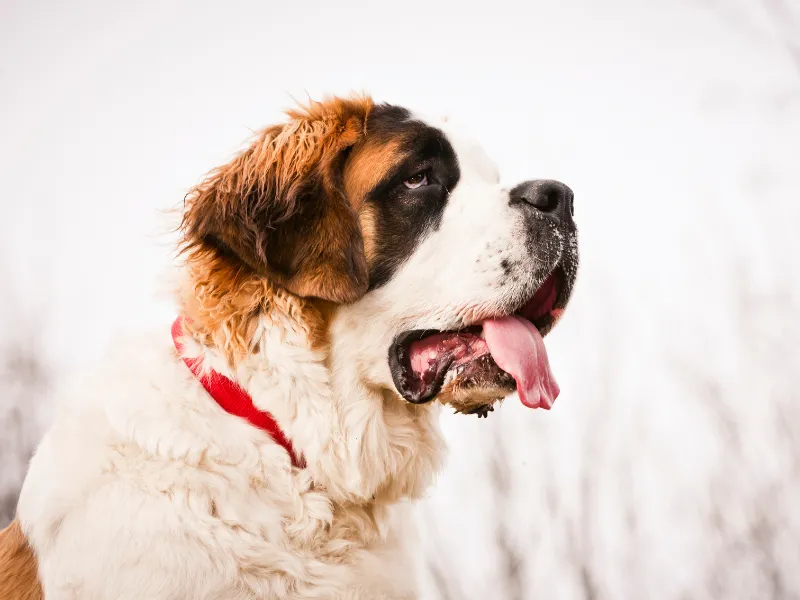
The Saint Bernard is the original gentle giant—a massive dog with an even bigger heart. Bred for centuries to rescue lost travelers in the Swiss Alps, these dogs possess a calm, patient temperament that makes them exceptional family companions, particularly with children. They're surprisingly low-energy indoors, content to sprawl across the floor and watch over their family. But potential owners must be prepared for their prodigious drool! This is a breed that will test your commitment to vacuuming and your tolerance for slobber. For those who can look past the mess, the Saint Bernard offers unwavering loyalty, gentle protection, and a presence that fills both your home and your heart.Stats:
- Height: 26-30 inches
- Weight: 120-140 lbs (female) | 140-180 lbs (male)
- Coat: Smooth or long-haired double coat, both heavy shedders
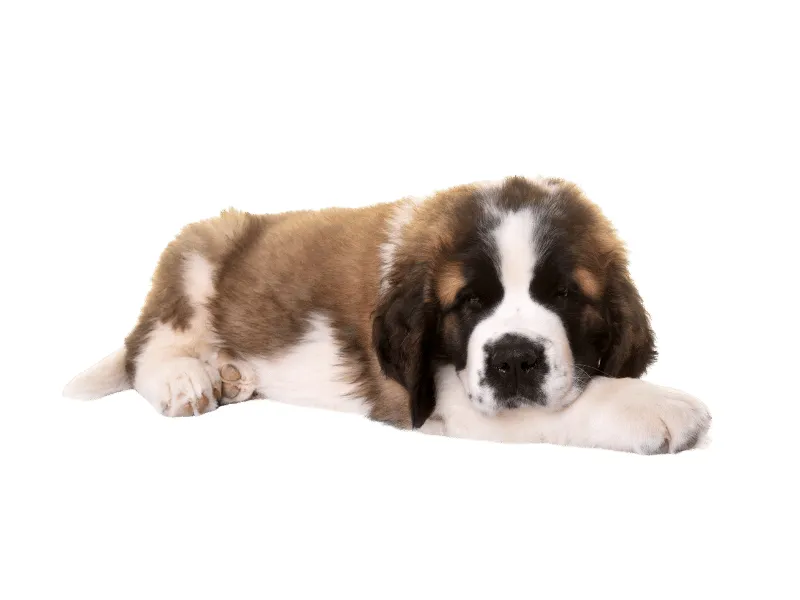
- Colors: White with red, mahogany, brindle, or orange markings
- Lifespan: 8-10 years
Note: 5/5 DROOLER! Keep towels handy at all times.
Origin & History
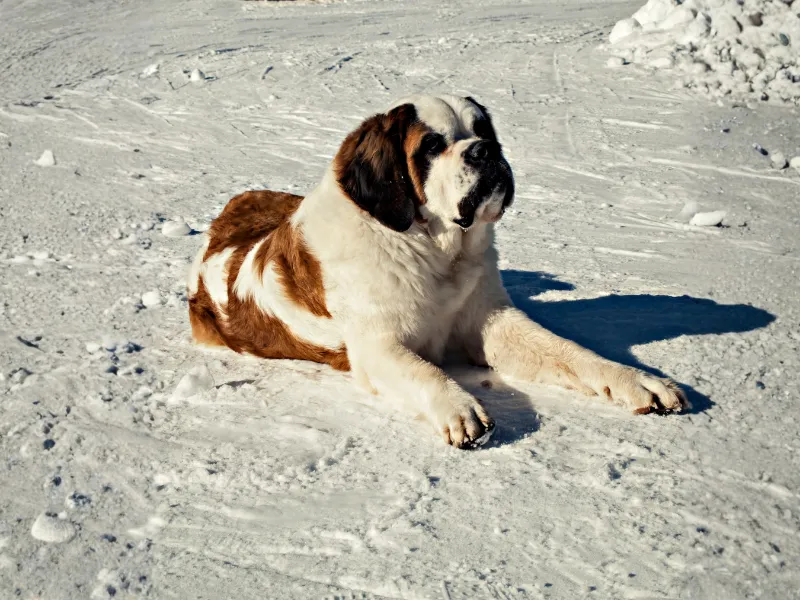
The Saint Bernard originated in the Swiss Alps around 1050 AD at the Great St. Bernard Pass hospice, where monks bred them as rescue dogs to locate lost travelers in the snow. Descended from ancient mastiff-type dogs brought to Switzerland by Roman armies, these gentle giants became legendary for their avalanche rescue work and remarkable ability to find and dig out buried victims. The most famous of these rescue dogs, Barry, reportedly saved over 40 lives between 1800-1812, and his taxidermied body remains on display at the Natural History Museum in Bern.
By the early 1800s, their reputation spread throughout Europe, and they became beloved as both working dogs and companions. The breed faced near-extinction in the hospice kennels due to harsh winters and disease, but dedicated breeders in Switzerland preserved them. The classic image of a Saint Bernard with a small brandy barrel around its neck comes from an 1820 painting by Edwin Landseer and, while historically inaccurate (the hospice monks never used brandy for rescues), it remains part of their charming folklore.
Today, while no longer used for mountain rescue (modern techniques and helicopters have replaced them), Saint Bernards remain devoted family companions, maintaining their calm temperament and iconic appearance. They compete in drafting, carting, and obedience trials, but most are simply cherished family members. The breed standard recognizes two coat varieties—smooth and long-haired—both requiring regular grooming. With their massive size, kind expression, and legendary patience, Saint Bernards continue to symbolize Alpine rescue heritage while forming deep, protective bonds with their families. They are truly gentle giants in every sense of the word.
| Traits: | 1 | 2 | 3 | 4 | 5 |
|---|---|---|---|---|---|
| Energy: Low/Moderate; needs daily exercise but tires easily in heat | ✓ | ||||
| Easy To Train: Intelligent but somewhat stubborn; responds to patient training | ✓ | ||||
| Shedding: High; thick, dense coat releases fur constantly with heavier seasonal shedding. | ✓ | ||||
| Grooming: Moderate to high; regular brushing needed (especially long-haired) | ✓ | ||||
| Family Dog: Excellent with families; gentle and patient with children | ✓ | ||||
| Watchdog: Good; will alert to strangers but generally not aggressive | ✓ | ||||
| Beginner Friendly: Challenging for first-time owners due to size | ✓ | ||||
| Prey Drive: Low; gentle with other animals | ✓ | ||||
| Barking: Only to alert | ✓ | ||||
| Good with other dogs: Ok if properly socialised; known for gentle nature | ✓ |
Health Concerns:
- Hip/Elbow Dysplasia: Common joint issues in giant breeds
- Bloat (GDV): Life-threatening stomach torsion
- Cardiomyopathy: Heart muscle disease
- Epilepsy: Seizure disorder
- Ectropion/Entropion: Eyelid abnormalities
- Osteosarcoma: Bone cancer common in large breeds
Please check the Canine Health Information Center (CHIC) and parent breed clubs for health information.
Glossary of general canine health conditions.