Wirehaired Vizsla
AKC & CKC Sporting Group



Origin & History
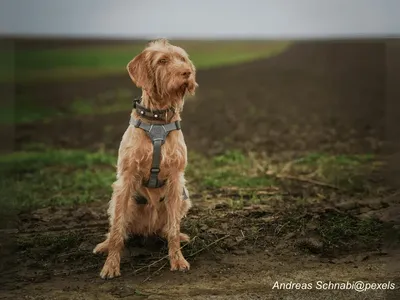
The Wirehaired Vizsla was developed in 1930s Hungary as a more weather-resistant version of the smooth-coated Vizsla. Breeders crossed the original Vizsla with German Wirehaired Pointers and possibly other wire-coated breeds to create a dog that could work in harsher conditions while maintaining the Vizsla's exceptional hunting abilities.
These versatile gun dogs were bred to point, retrieve, and track game in both water and field. Their distinctive wiry golden coat provides protection from brambles and cold weather. They are recognized as a separate breed from the smooth Vizsla.
Today, Wirehaired Vizslas excel as both hunting companions and family pets, valued for their intelligence, loyalty, and distinctive bearded appearance.
Stats:
- Height: 21.5-25
- Weight: 45-65 pounds
- Coat: Dense, wiry, water-resistant with bushy eyebrows
- Colors: Golden rust in various shades
- Lifespan: 12-14 years
| Traits: | 1 | 2 | 3 | 4 | 5 |
|---|---|---|---|---|---|
| Energy: Very high; needs vigorous daily exercise | ✓ | ||||
| Easy To Train: Intelligent and eager to please; responds well to training | ✓ | ||||
| Shedding: Low. Harsh, straight coat with minimal shedding | ✓ | ||||
| Grooming: Minimal; weekly brushing and occasional hand-stripping | ✓ | ||||
| Family Dog: Excellent; affectionate and gentle with children | ✓ | ||||
| Watchdog: Good; protective but not aggressive | ✓ | ||||
| Beginner Friendly: Good for active owners committed to exercise | ✓ | ||||
| Prey Drive: Very high; strong hunting instincts | ✓ | ||||
| Barking: Moderate; may bark when excited | ✓ | ||||
| Good with other dogs: Gentle-mannered gun dog | ✓ |
Health Concerns:
- Hip Dysplasia: Malformation of the hip joint
- Elbow Dysplasia: Abnormal development of elbow joints
- Eye Conditions: Including entropion and progressive retinal atrophy, glaucoma & cataracts
- Hypothyroidism: Underactive thyroid gland
- Canine Hyperuricosuria (HUU): Excessive uric acid in the urine
- Heart: Sub-aortic stenosis
- Epilepsy: Seizure disorder seen in some lines
Please check the Canine Health Information Center (CHIC) and parent breed clubs for health information.
Glossary of general canine health conditions.