Growing up with a dog can teach children kindness, patience, empathy, and responsibility. Dogs can become treasured companions, sharing in family adventures, games, and everyday life.
But a good relationship between children and dogs doesn't happen automatically. Children need to learn how dogs communicate, what makes them comfortable or uncomfortable, and how to respect their boundaries. Even the gentlest family dog has limits.
Dogs Communicate Differently Than We Do
Dogs cannot tell us in words when they're worried, frightened, uncomfortable, or simply want to be left alone. Instead, they communicate through their posture, facial expressions, movements, and behaviour.
A relaxed dog may have a loose, comfortable body, soft eyes, and a gently moving tail. A dog that feels uncomfortable may turn its head away, lick its lips, yawn, become stiff, or attempt to move away. These signals must be interpreted together with the situation and the dog's overall body language.
Children often overlook these early signs, particularly when they're excited about playing with a dog. Teaching them to notice discomfort helps them understand that dogs have feelings and boundaries, too.
A Wagging Tail Doesn't Always Mean a Happy Dog
One common misunderstanding is that a wagging tail always means friendliness. Dogs wag their tails for several reasons, including excitement, uncertainty, and heightened arousal.
A dog with a loose, wiggly body may be inviting friendly interaction. A dog standing stiffly with a high, rapidly moving tail may be tense or highly aroused. Teach children to look at the whole dog rather than relying on a single signal.
Let the Dog Choose
Children naturally want to hug, kiss, and cuddle animals they love. Unfortunately, many dogs do not enjoy being hugged tightly, restrained, or having someone put their face close to theirs. A dog may tolerate these interactions without enjoying them.
Instead, teach children to let a dog choose whether to interact. A child can invite a dog to approach without chasing, grabbing, or cornering it. If the dog comes willingly and appears relaxed, gentle petting may be appropriate with an adult's guidance.
After a few seconds, pause. If the dog moves away, turns its head, or shows discomfort, the interaction should end. A dog that wants more attention may remain nearby or seek further contact.
When Dogs Need Their Space
Some situations deserve special attention because dogs may be more easily startled, frightened, or protective of something they value.
- Sleeping dogs: A sleeping dog may be startled if suddenly touched. Let sleeping dogs rest undisturbed.
- Eating dogs: Children should never reach into a dog's food bowl, take away food, or interfere while a dog is eating.
- Dogs with bones or toys: Some dogs guard valued possessions. Children should not remove items from a dog's mouth or take something the dog is protecting.
- Dogs caring for puppies: A mother dog may be sensitive about her puppies. Children should not approach or handle them without appropriate adult management.
- Tied or confined dogs: A dog that cannot move away may feel trapped. Children should not approach unfamiliar dogs behind fences, in kennels, or on tethers.
Giving dogs space in these situations helps prevent misunderstandings and potentially dangerous encounters.
Recognizing When a Dog Is Uncomfortable
Dogs often communicate discomfort before growling or snapping. Signs may include:
- Turning the head or body away
- Tail tucked between the legs, which can indicate fear or anxiety
- Repeated lip licking when no food is present
- Yawning in a stressful situation
- Showing the whites of the eyes
- Freezing or becoming unusually still
- Holding the body stiffly
- Trying to hide or move away
- Growling, snarling, or showing teeth
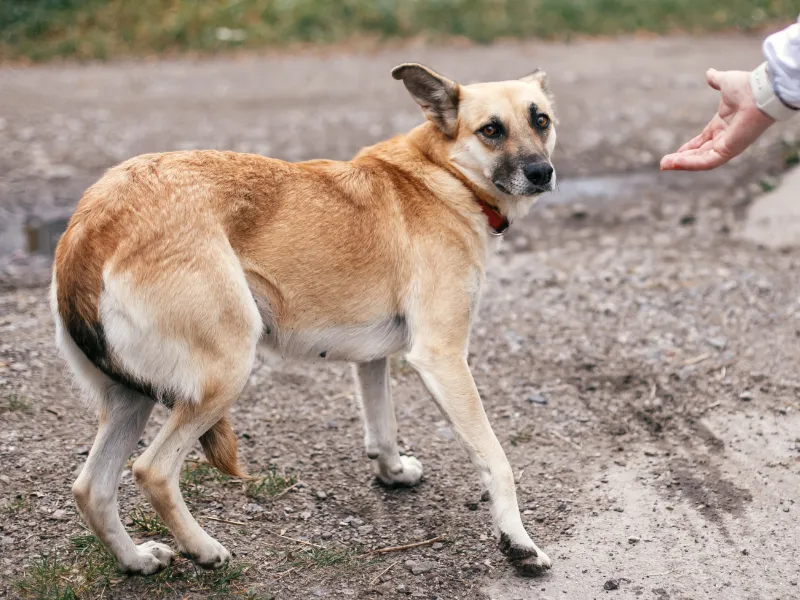
Not every yawn or lip lick means a dog is anxious. Context matters. When a dog shows discomfort, children should stop interacting and give the dog space.
Growling is an important warning signal. Punishing a dog for growling may discourage that warning without addressing the underlying discomfort. Adults should intervene before a situation escalates.
Always Ask Before Approaching an Unfamiliar Dog
Children should never assume that a dog is friendly simply because it looks happy, is small, or belongs to a familiar breed. Before interacting with an unfamiliar dog, children should ask their supervising adult and the dog's owner for permission.
Even when permission is given, the dog should be allowed to choose whether to approach. A dog that backs away, hides, freezes, or appears uncomfortable should be left alone. Children should avoid rushing toward dogs, reaching over their heads, or putting their faces close to them.
If an unfamiliar dog approaches unexpectedly, children should avoid running, screaming, or making sudden movements. They should remain calm and still, with their hands close to their bodies, while an adult helps manage the situation.
Children and Dogs Must Be Supervised
Young children should never be left alone with a dog, regardless of the dog's breed, size, or history. Even a dog that has lived happily with a family for years may react unexpectedly when frightened, hurt, startled, or overwhelmed.
Supervision means more than simply being in the same room. An adult should be close enough to observe interactions, recognize discomfort, and intervene when necessary.
Babies and toddlers require particular care because they cannot reliably understand or respect a dog's boundaries. When active supervision is not possible, children and dogs should be safely separated using appropriate barriers or separate spaces.
Are Some Dog Breeds Better With Children?
Certain breeds have reputations for being patient, affectionate, and well suited to family life. Breed characteristics can be useful when choosing a dog, but they are not guarantees of individual behaviour.
A dog's temperament is influenced by genetics, early experiences, socialization, training, health, and environment. A large, gentle dog may accidentally knock over a small child, while a small dog may become frightened by rough handling.
Rather than choosing a dog based solely on its reputation, families should consider the individual dog's temperament, exercise needs, size, energy level, and suitability for their household.
Looking for a family dog? Explore our Family-Friendly Dog Breeds page to learn about breeds that may suit family life. Remember that every dog is an individual, and supervision and training remain essential.
Building a Positive Relationship
Children and dogs can enjoy many activities together when interactions are appropriate for the child's age and the dog's temperament. With adult guidance, children may help prepare a dog's meals, participate in reward-based training, hide treats for scent games, or learn how to brush a dog that enjoys grooming.
Older children can begin learning about canine body language, responsible ownership, and the importance of consistent routines. These activities help children appreciate dogs as living beings with individual needs, rather than simply as playmates.
The goal isn't to teach children that dogs are dangerous. It's to help them understand that dogs deserve kindness, patience, and respect.
Teaching Children Through Pictures and Activities
Young children often learn best through pictures, stories, repetition, and hands-on activities. Looking at illustrations of relaxed, worried, frightened, and uncomfortable dogs can help children begin recognizing important differences in canine body language.
Parents can reinforce these lessons by talking about what a dog might be feeling and discussing what a child should do in different situations.
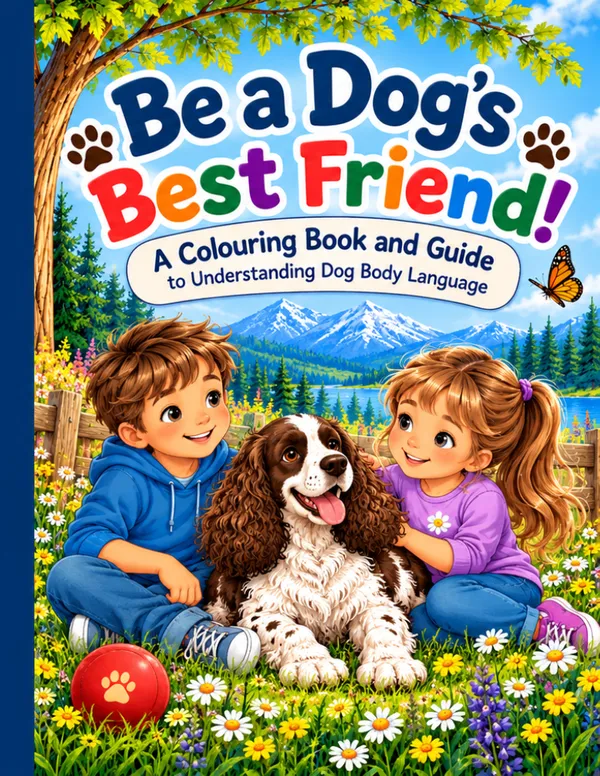
Be a Dog's Best Friend
A fun colouring book about being safe around dogs.
Help children recognize dog body language, respect boundaries, and make safer choices around familiar and unfamiliar dogs through simple explanations and engaging colouring activities.
Explore Our Dog Safety Colouring BookA Friendship Built on Understanding
The relationship between a child and a dog can be one of life's most rewarding experiences. But friendship involves more than affection. It requires understanding, patience, and respect for each other's needs.
When we teach children to recognize what dogs are communicating, we help protect both children and dogs while creating opportunities for happier, more trusting relationships.
The best friendships begin when we learn to listen — even when no words are spoken.