Is This the Right Breed for You?
✔ Excellent Match For
- Owners who want a smart, trainable companion that’s active but manageable in size
- People who enjoy obedience, rally, tricks, nosework, or agility-style games
- Homes that can provide daily walks plus mental enrichment (poodles get bored easily)
• Highly intelligent: learns fast and often loves working with you.
• Adaptable size: larger than Toy, easier handling for many families.
• People-focused: thrives when included in routines, not left alone all day.
✖ Consider Carefully If
- You want a “low-maintenance” coat (regular grooming is required)
- You prefer a low-training breed (they need stimulation and structure)
- You want a very quiet dog (some can be alert barkers without guidance)
• Coat mats quickly without brushing and routine trims.
• Sensitive and smart: best with calm, positive training methods.
• Enrichment prevents nuisance behaviors (barking, restlessness, mischief).
Owner Suitability
“Miniature Poodles do best with owners who enjoy training and can commit to regular grooming. They’re bright, affectionate, and adaptable, but they need daily mental stimulation plus consistent routines. If you want an interactive companion that’s easy to teach and fun to live with, the Miniature Poodle is an excellent match.”Stats:
- Height: 10–15 inches
- Weight: 10–15 pounds
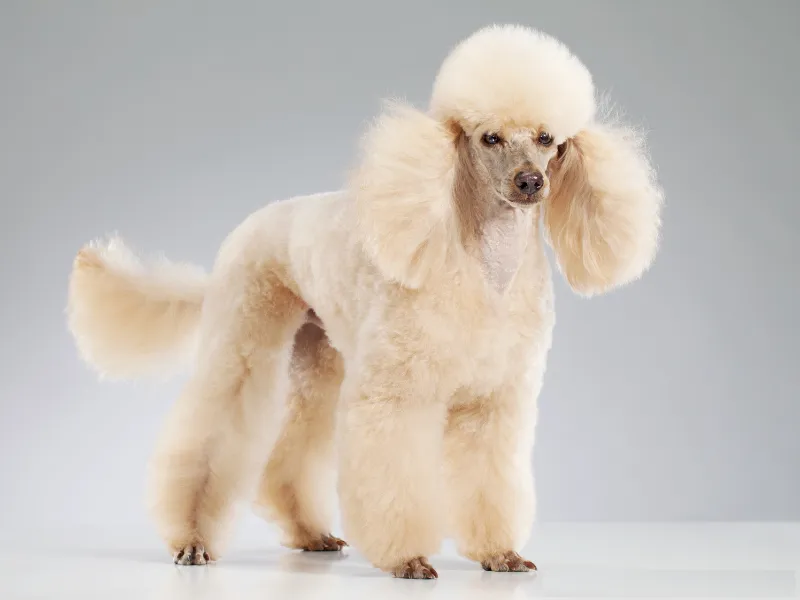
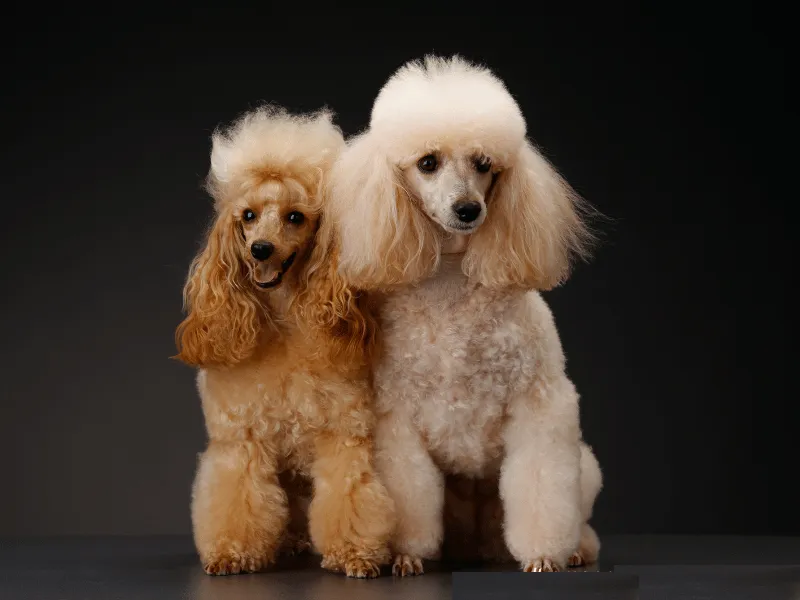
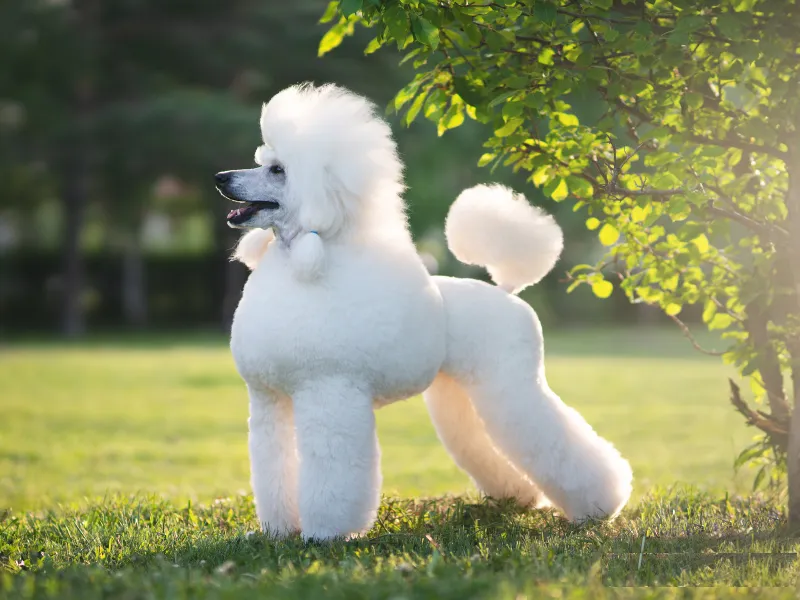
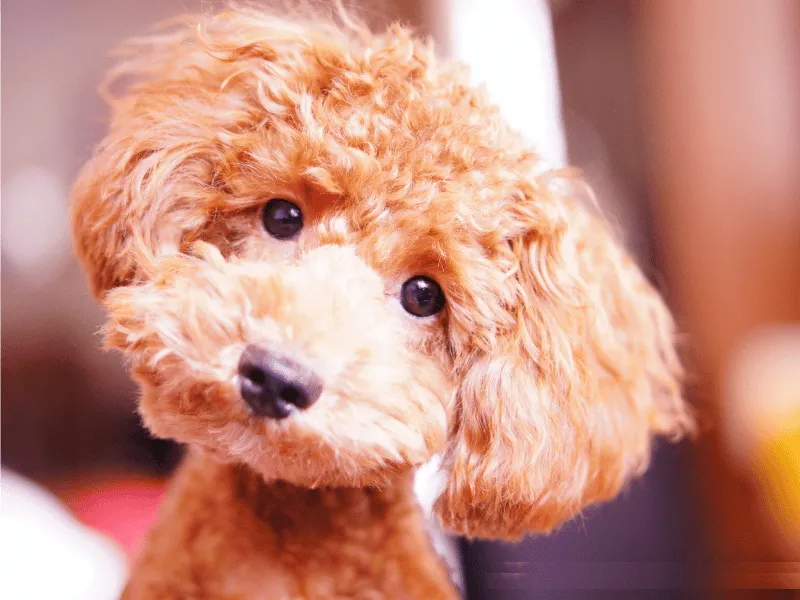
- Coat: Curly, dense coat (low-shedding; requires routine grooming)
- Colors: Many colors (white, black, apricot, red, silver, cream, and more)
- Lifespan: 10–18 years
Care note: Plan for brushing at home and professional grooming every few weeks to prevent mats and keep the coat comfortable.
Origin & History
Poodles were originally developed as water retrievers and became known for intelligence, athleticism, and trainability. Over time, smaller sizes were bred to create companions that kept the same working ability in a more compact form.
The Miniature Poodle sits between the Toy and Standard sizes—often a “best of both worlds” option for people who want a poodle brain with a more medium-small body.
Today, Miniature Poodles remain standout companion dogs. With consistent training and enrichment, they commonly excel in obedience, rally, tricks, and other dog sports—while also being loving family pets.
| Traits: | 1 | 2 | 3 | 4 | 5 |
|---|---|---|---|---|---|
| Energy: Moderate to high; needs regular exercise | ✓ | ||||
| Easy To Train: Extremely intelligent and eager to please | ✓ | ||||
| Shedding: Minimal shedders; curly, hypoallergenic coat traps loose fur. | ✓ | ||||
| Grooming: High maintenance; professional grooming needed | ✓ | ||||
| Family Dog: Excellent with children and families | ✓ | ||||
| Watchdog: Good; alert but not excessive barking | ✓ | ||||
| Beginner Friendly: Good for novice owners | ✓ | ||||
| Prey Drive: Moderate; may chase small animals | ✓ | ||||
| Barking: Moderate; barks when appropriate | ✓ | ||||
| Good with other dogs: Can adapt to multi-dog homes with proper socialization. | ✓ |
Health Concerns:
- Patellar Luxation: Common in small breeds
- Legg-Calvé-Perthes: Hip joint disorder
- Progressive Retinal Atrophy: Eye condition
- Epilepsy: Seizure disorder
- Sebaceous Adenitis: Skin condition
- Epilepsy: Higher incidence than many breeds
- Thyroid Issues: Both hypo- and hyperthyroidism
- Von Willebrand's Disease: Blood clotting disorder
Please check the Canine Health Information Center (CHIC) and parent breed clubs for health information.
Glossary of general canine health condtions.